
When kids grow their first vegetable, they learn patience, problem-solving, and motor skills. And a lot of those lessons actually come from things going wrong, which surprises many parents the first time they see it happen.
We’re Truck Farm Omaha, a youth-led urban gardening program where kids involved gain real-life skills through practical experiences. We’ve watched hundreds of kids channel curiosity, energy, and creativity into real-world life skills through our programs.
In this article, we’ll discuss what truly happens when kids grow their first vegetable. You’ll also find out what they realize when things go wrong and which mistakes kill their interest before the harvest time.
Read on to learn what your kid’s first gardening experience really teaches them.
What Really Happens When Kids Grow Their First Vegetable?

Kids usually scatter seeds everywhere, drown plants, and step on seedlings when they try to grow their first vegetables. Soon, you realize that the Pinterest-perfect garden you imagined isn’t what the real world looks like.
Let’s get into more detail about these experiences.
Chaos Nobody Warns You About Children’s Gardening
Suppose you’ve handed your four-year-old a packet of radish seeds and then explained spacing, depth, and all the basics. It’s more likely that five seconds later, you’ll see she has dumped the entire packet of seeds into one corner like she’s feeding fish.
And it doesn’t stop with the seeds. You show her how to aim water at the soil and not the leaves. But then she grabs the can and creates a waterfall directly onto the tomato plant’s head while the roots stay completely dry (expert advice: just celebrate the attempt and stay out of the way).
A week later, you’ll find seedlings sprouting in the grass, the pathway, and everywhere except the actual garden bed. And nobody warns you about this chaos.
However, there’s a lesson in all that, which we’ll discuss later in this article.
Why the Mess Helps Development
Most parents panic when they see dirt under their kids’ fingernails. But they don’t know that it strengthens their immune system because soil bacteria train young bodies to handle allergens better. So, the more they dig around in real dirt, the stronger they get.
Children also learn through the things that happen with plants. For example, they learn about cause and effect when they overwater a cherry tomato plant, and the leaves droop and turn yellow.
Simple hands-on garden tasks like this also help strengthen finger skills, which later support tasks like writing.
Pro tip: Use pots or small spaces first to reduce pressure and help kids build confidence.
What Do Kids Learn When Their First Kids’ Garden Fails?
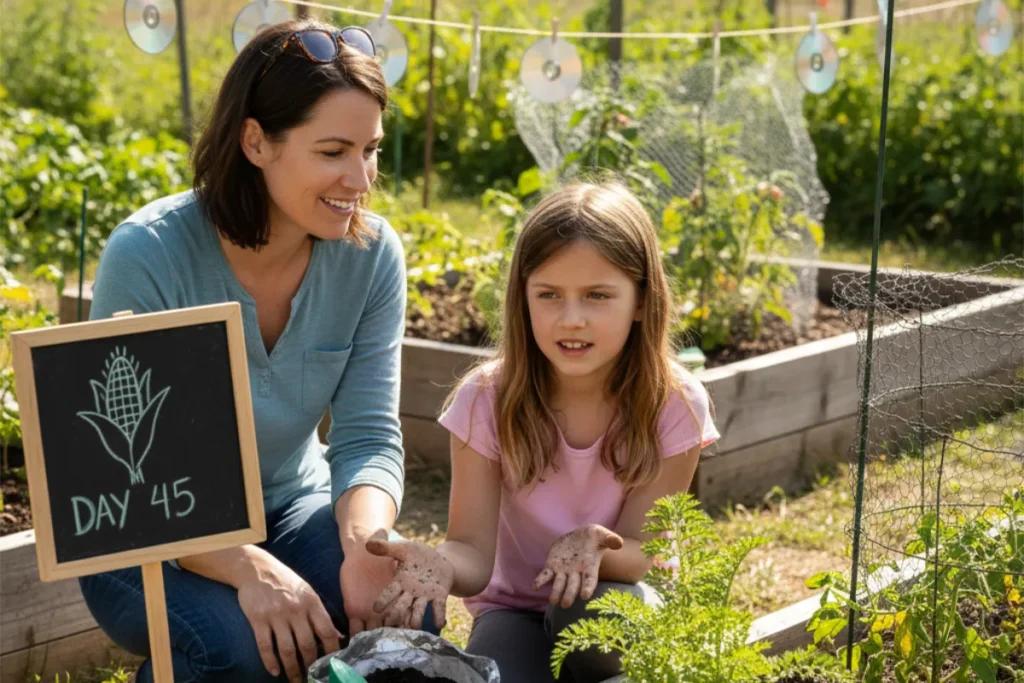
The first time a kid walks out to the garden and sees a wilted plant, it usually stops them in their tracks. That moment teaches resilience, patience, and problem-solving far more effectively than a perfect harvest ever could.
Over time, even failed attempts in raised beds help kids feel more willing to try new vegetables.
Here’s what gardening teaches children about certain things:
- Dead Plants Build Resilience: When kids forget to water a plant, and it dies, they feel disappointed at first. But instead of quitting, most want to try again. That small failure often builds more persistence.
- Pests Force Creative Solutions: The way pests spark creativity in your children is one of the best things you’ll see. For instance, if they find out that squirrels nibble the butternut squash that they planted, they’ll start checking the garden produce every morning. And keeping rabbits away will become a problem they enjoy solving.
- Waiting 70 Days Rewrites Patience: Some crops like lettuce grow fast, but corn takes time. That contrast helps kids understand patience by watching plant growth, and it changes how they think about waiting for a harvest.
- Tasting Failures Changes Eating Habits: Growing a food that a child refuses to eat often changes how they feel about it. It happens because caring for their own food builds familiarity, which eventually creates trust. This experience makes kids more open to tasting food they once avoided.
That’s how a simple garden becomes a powerful place for learning for your youngsters.
What Mistakes Ruin the First Gardening Experience?
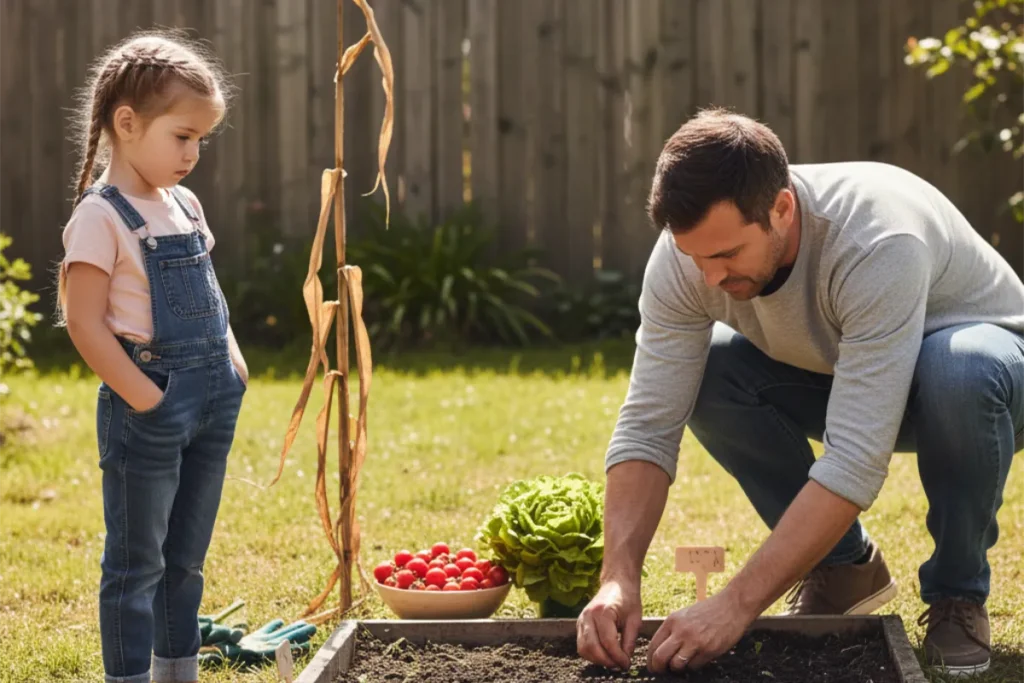
When parents step in to fix every crooked row or replant every “wrong” seed, kids lose interest fast. What feels helpful to adults often teaches children that their choices aren’t as important in the garden.
We’ll explain how these actions push kids away from gardening before they even get a harvest.
Parents Controlling Every Step
Do you know what happens when a parent follows behind their kid, straightens every seed, and replants the “wrong” ones? The kid quits trying after about ten minutes. Your six-year-old planted those carrots in a zigzag pattern because that’s what made sense to her.
That’s why when you change the way they planted the seeds originally, you remove all ownership from young gardeners (kids love their autonomy).
More importantly, correcting every mistake blocks them from learning through consequences. So, let children make decisions from their own seed selection onward. For example, if they want to plant vegetables but prefer flowers more, let them figure out that you can’t eat marigolds.
Picking Plants That Take Forever
The worst thing for a first gardening experience is starting with plants that grow too slowly. Yes, corn and pumpkins sound exciting at first, but they take months to grow, which makes kids give up on them.
Instead, we recommend choosing fast growers like plant herbs, lettuce, or cherry tomatoes. These plants allow your children to see the progress quickly (especially during summer) and keep them excited to keep going.
Your Next Steps for Gardening With Children
We’ve reached the end of our guide on what kids really learn from their first garden. By now, it’s clear that the messy parts, small failures, and imperfect moments teach them in ways a perfect setup never does.
If you want to engage children in gardening without pressure or perfection, reach out to us today. We’ll help you find a youth garden program where kids can explore, experiment, and learn at their own pace.