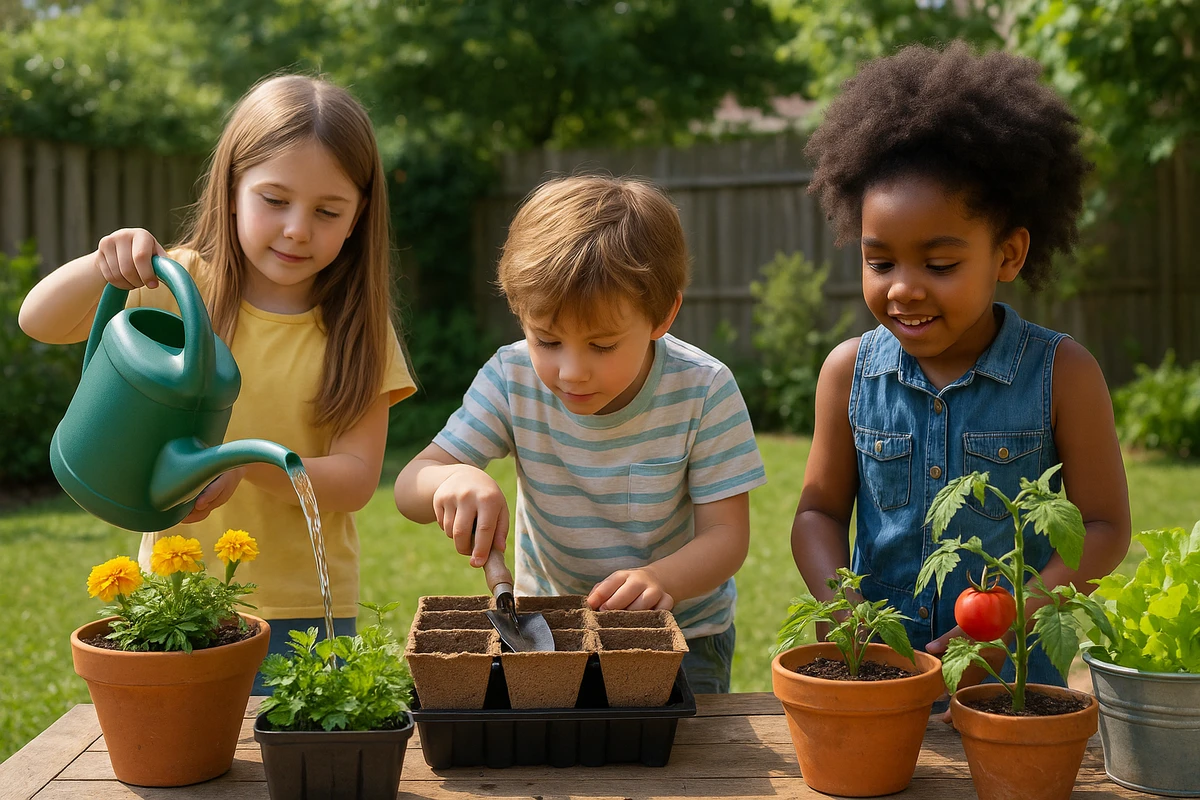
Getting a child to eat vegetables feels like negotiation warfare. But hand them a cherry tomato they grew themselves? Suddenly, it’s the best thing they’ve ever tasted.
The good news is that you don’t need a backyard or gardening expertise to make this happen. A few simple supplies like containers, kitchen scraps, and a sunny spot are enough to get started.
This guide covers five easy kids’ gardening projects that deliver quick results, from herbs ready in weeks to sprouts visible overnight. Pick whichever fits your space and available time.
Let’s start with one that works on any kitchen windowsill.
Kitchen Windowsill Herbs That Kids Love
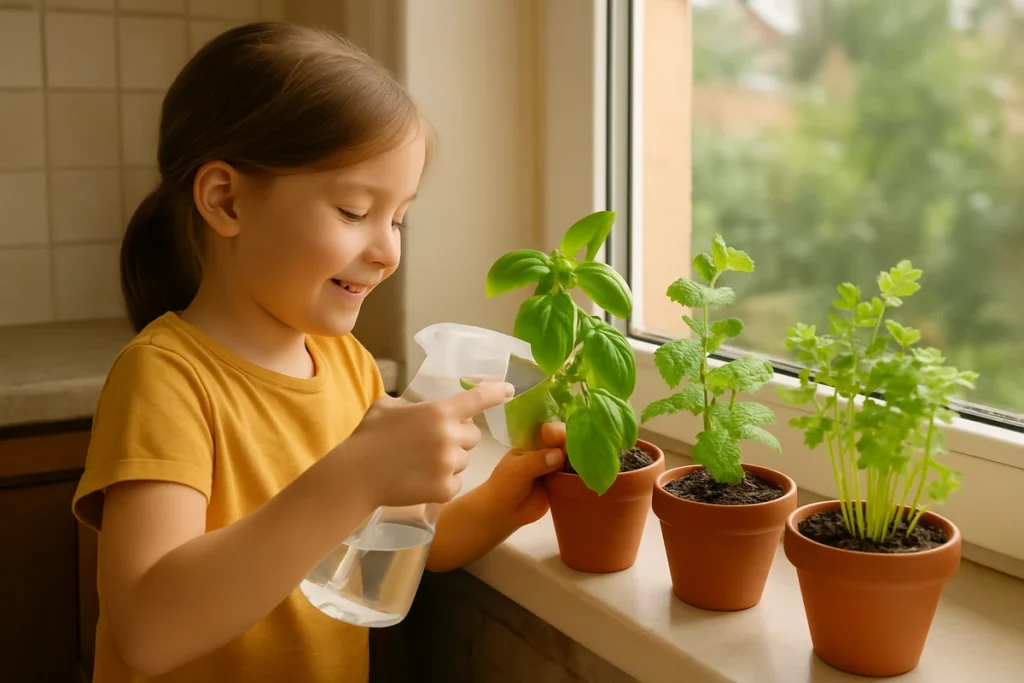
Windowsill herb gardens work because they fit anywhere, grow quickly, and produce ingredients kids actually want to use. Basil for pizza, mint for smoothies, parsley for practically everything. These herbs are forgiving and thrive even with minimal attention, which makes them ideal for young gardeners.
Getting started requires just a few small containers and potting soil. Small terracotta pots work perfectly, though yogurt containers or mason jars with drainage holes poked in the bottom do the job just as well. Give each herb its own container since they have different watering needs (mint drinks more water than basil, for instance).
Once everything is planted, the daily watering routine becomes a natural teaching moment about plant care. Kids can check the soil with their finger and water when the top inch feels dry.
Within three to four weeks, harvest time arrives. When the kids carefully snip fresh oregano for pizza night or mint for weekend smoothies, they create a direct connection between growing and eating.
Bean Sprouts in a Jar
In our experience, bean sprouts are one of the fastest ways for kids to see gardening success. They can start growing within 24 hours and be ready to eat in under a week. That quick progress keeps young gardeners excited and engaged, even when other projects might take longer.
Getting started is easy. Follow this simple sprouting method:
- Soak the Beans: Two tablespoons of mung beans or lentils swell as they soak in a clean mason jar for 8–12 hours. After soaking, drain and rinse thoroughly so they’re ready to sprout.
- Cover the Jar: Covering the jar with cheesecloth or a fine mesh screen secured with a rubber band keeps air flowing while the beans rest.
- Drain Properly: Excess water drains away when you tilt the jar at a 45-degree angle in a bowl. Then tuck the jar into a dark cupboard or cover it with a towel for a cozy, hidden spot.
- Rinse Daily: Tiny green shoots start to peek out within a few days. Rinse and drain twice daily to keep the sprouts healthy and growing.
- Move to Sunlight: After 3–5 days, move the jar to indirect sunlight for a few hours. Watch the leaves stretch and turn green as they get ready for harvest.
The daily routine takes less than five minutes, and once kids learn the rinsing technique, they can handle it on their own.
Container Vegetables: Cherry Tomatoes and Lettuce

Watching a child pick and eat a tomato they grew themselves is a special moment. Container gardening makes this possible even in small spaces. While vegetables take a little longer to mature than herbs and sprouts, the excitement of a full harvest is well worth the wait.
A compact vegetable like cherry tomatoes is a good place to start. They produce dozens of bite-sized fruits throughout the season, and kids love eating them straight from the plant.
If you want something leafy, lettuce is another easy option. Varieties like buttercrunch or oak leaf can be harvested leaf by leaf, and the plants keep producing over time. Both vegetables bounce back if watering is occasionally missed, which makes them easy for young gardeners to care for.
Once you’ve picked your vegetables, the next step is giving them a good home. Pick containers that are large enough for the plants to grow comfortably. Cherry tomatoes need at least 12 inches of depth, while lettuce does well in 6 to 8-inch containers. Make sure there are drainage holes so roots don’t sit in water.
When planting, give each plant enough space so they don’t crowd each other. Use one cherry tomato per large container or three to four lettuce plants in a wider planter. Spacing the plants like this lets them grow fully and gives kids a harvest to enjoy.
Regrowing Green Onions from Scraps
Green onions are perfect for a quick gardening project because they naturally regrow from their roots. Kids can start with kitchen scraps and see new growth in just a few days.
- Keep the Roots: Save the white root ends from store-bought green onions (about an inch at the bottom with the stringy roots).
- Place in Water: Put the root ends in small glasses of water on a sunny windowsill. Make sure the water covers the roots but not the entire white portion.
- Watch Them Grow: Within a few days, fresh green shoots will start to peek out. Kids enjoy checking their progress each morning.
- Refresh Regularly: Change the water every couple of days to keep roots healthy and encourage steady growth.
- Plant in Soil: After about two weeks, when the roots are well-established, move them into small pots with soil. Plant about an inch apart in containers at least four inches deep. Keep the soil consistently moist but not waterlogged.
This project combines the instant gratification of rapid growth with the satisfaction of using kitchen scraps productively. Kids can continue harvesting multiple times throughout the season while learning about plant care.
Fast-Growing Radishes and Baby Carrots

Want a garden project that shows kids the hidden world under the soil? Root vegetables like radishes and baby carrots let children explore how plants grow below the surface while learning patience and basic science.
Radishes are especially rewarding. They can be ready to harvest in just 25 to 35 days, according to the University of Maryland Extension. Baby carrots take a little longer but still deliver satisfying results within six to eight weeks, much faster than full-sized carrots that need months to mature.
Growing underground vegetables feels different from working with leafy plants. Kids won’t see much happening day to day, but the slow buildup to harvest teaches them to observe small changes and appreciate the payoff when they finally pull their crops from the soil.
Start Your First Kids’ Gardening Project This Week
Growing food with kids does not require a backyard or special expertise. These five projects work in small spaces such as a sunny windowsill for herbs or simple containers for vegetables, and they deliver results that keep children interested.
Choose projects that match your child’s age and curiosity. Quick wins like bean sprouts are great for younger kids. Cherry tomatoes and root vegetables introduce a slower and more rewarding harvest. What makes these projects special is how they invite kids to explore, learn, and take pride in something they helped grow.
Pick one project to start this weekend and watch your child’s excitement grow. And if you ever want guidance along the way, you can reach out to us at Truck Farm Omaha.