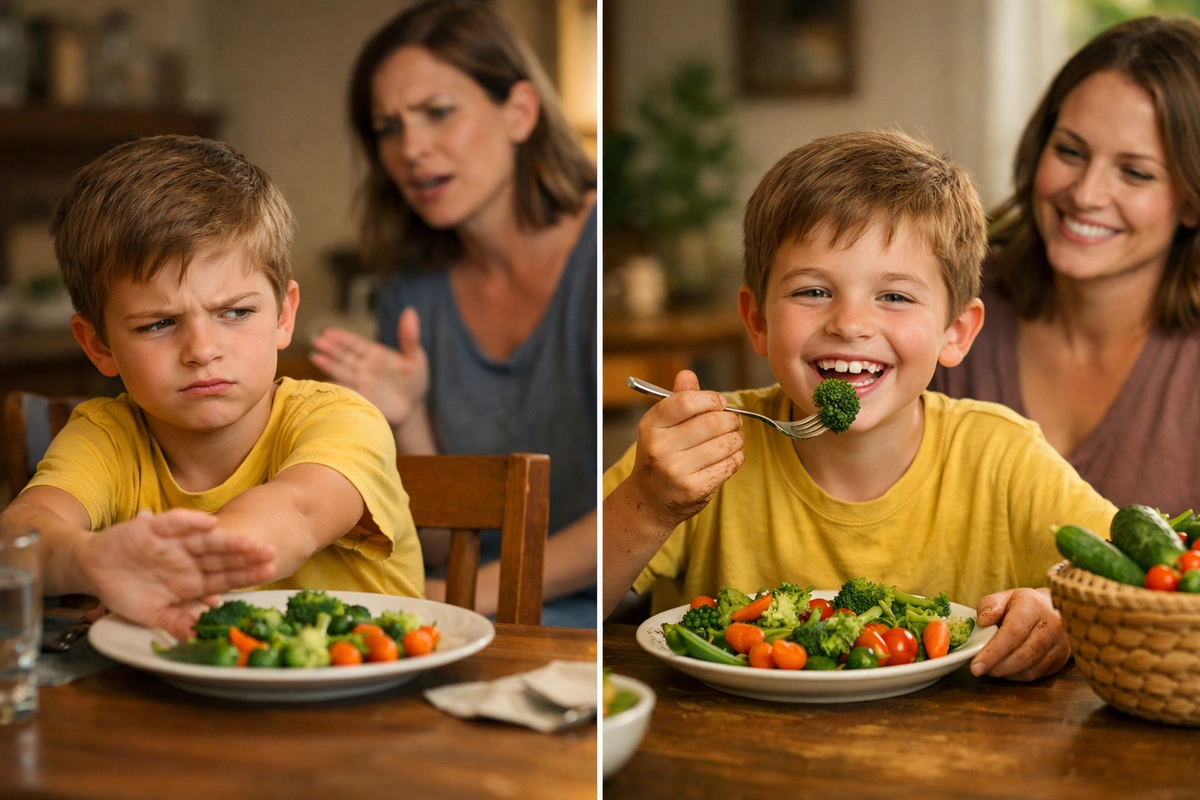
Dinner is on the table, but your child is already shaking their head. One look at the vegetables and negotiations begin. You ask for “just one bite.” They push the plate away. You wonder how something so small can feel so exhausting, night after night.
The problem is that many parents assume picky eating is about taste. But it’s usually about distance. When kids only see food as something that appears on a plate, they have little reason to feel curious or invested.
Food responsibility changes that dynamic. When children help grow, prepare, and understand their food, mealtime stops being a battle. This guide explores simple, realistic ways to build that responsibility early, starting small and working with real family routines.
Ready to turn picky eaters into curious ones? Let’s start with what food responsibility actually means.
What Does Food Responsibility Mean for Kids?
Food responsibility is when kids understand where their meals come from and respect the effort behind growing and preparing food. The mindset develops gradually as children see the full journey, from planting seeds to washing lettuce to sitting down for dinner.
A child’s role in food responsibility starts small. They might water plants, then help rinse vegetables the next week. These simple tasks show kids that meals don’t magically appear (someone actually grew that food).
And that shift changes how they eat. Kids’ healthy eating habits develop more naturally when effort is connected to outcome. A child who harvested a tomato is far more likely to eat it than someone who just found it on their plate.
This early connection also shapes long-term health. Healthy eating in childhood reduces the risk of chronic diseases like heart disease, type 2 diabetes, and obesity. And food responsibility gives kids a foundation to make better choices on their own, not because adults insist, but because they understand the value.
From Garden to Table: How Growing Food Teaches Responsibility
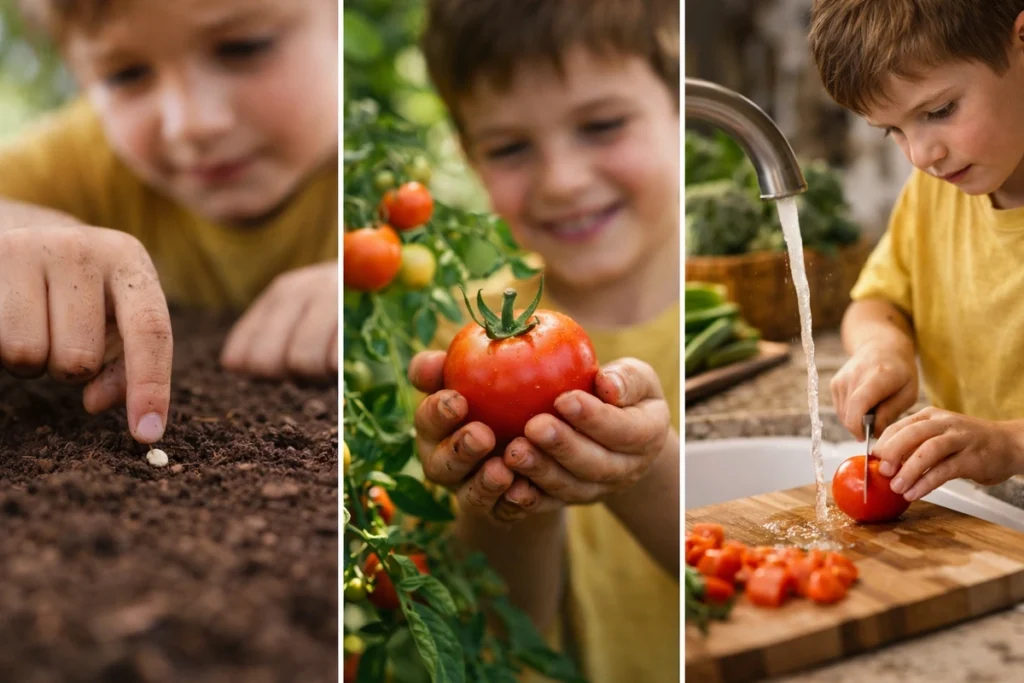
A kid who refuses broccoli at dinner might eagerly eat it if they picked it themselves that morning. When children get involved in growing their own food, it can completely change how they think about what ends up on their plate. Let’s look at how that simple shift can shape healthier eating habits from an early age.
Kids See Where Meals Actually Start
Watching seeds sprout into plants connects abstract ideas to something kids can touch and observe. They water the soil, check for new leaves, and wait for vegetables to ripen. That whole process teaches patience and consistency in a way no classroom lesson really can.
Once kids see how much work goes into growing a single tomato, they look at dinner a little differently.
Trying New Foods Feels Less Scary
Kids who grow their own tomatoes or carrots feel ownership over what they created. That weird-looking vegetable suddenly feels familiar because they watched it grow from a seed. The pride of harvesting something yourself removes the resistance to trying it.
The health benefits stack up, too. Research published in Systematic Reviews shows that higher intake of fruits and vegetables links to improvements in memory and attention. When kids eat more of what they grow, their bodies and brains both benefit.
Urban Gardening Gives Everyone Access
Container gardens, raised beds, and community plots bring growing opportunities to apartments and smaller spaces. You don’t need a big backyard to start. Even a few pots on a balcony teach kids planting, watering, and harvesting basics.
Programs using mobile gardens bring these experiences directly to neighborhoods where outdoor space is hard to find. If you don’t have room at home, community gardens or school programs can give kids the same hands-on experience.
Parents Provide, Kids Decide: The Satter Division Explained
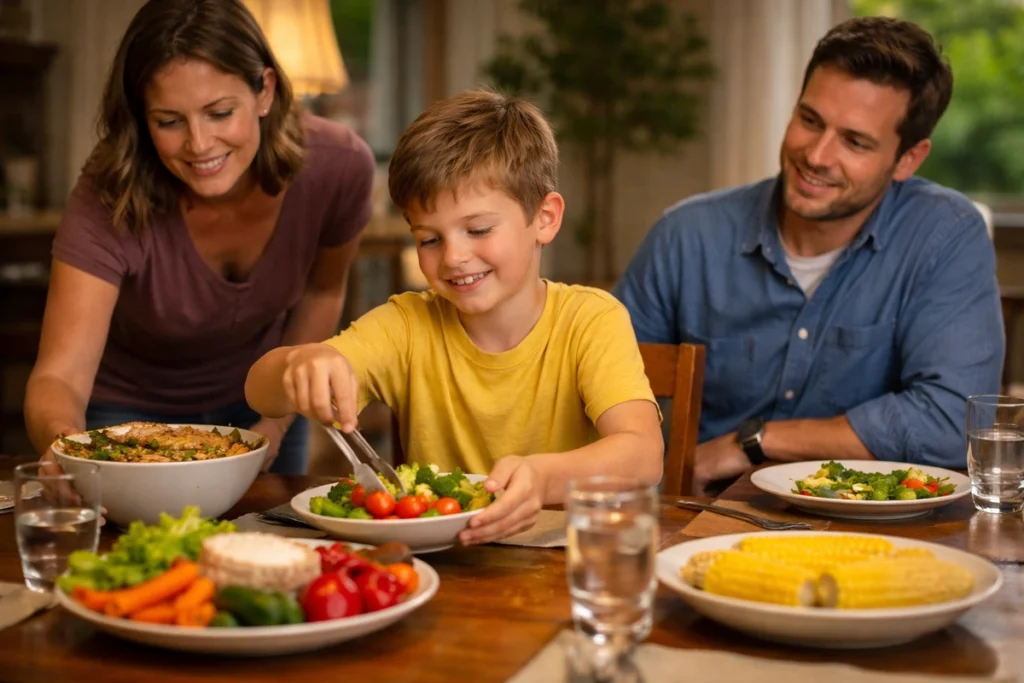
The Satter Division of Responsibility is a feeding framework that splits mealtime roles into two clear parts. Parents decide what food is offered, when meals happen, and where the family eats, while children decide whether to eat and how much.
This division ends most dinner table battles because it removes the pressure on both sides. When kids control their own portions, they start tuning into their actual hunger instead of ignoring it. The result? You’re not stuck begging for “three more bites” every night.
There’s also a biological reason this works. It takes about 20 minutes for the brain to register fullness. Children who get rushed or pressured through meals often miss those hunger signals completely. This approach gives them room to slow down, pay attention, and stop when they’re actually full.
Kids Learn Best by Prepping What They Grow
Harvesting vegetables is exciting, but the real learning happens when kids take the next step: washing, chopping, and cooking their own produce. Handling the harvest themselves shows them how garden vegetables become actual meals, something they can’t fully grasp just by watching adults cook.
Kids can prep what they grew in several hands-on ways:
- Wash and Inspect: Rinsing dirt off lettuce or checking tomatoes for soft spots teaches kids that food doesn’t arrive clean and perfect. They start noticing quality and understanding why fresh produce needs more care than grabbing something pre-packaged from the fridge (because grocery store tomatoes don’t come with garden dirt).
- Simple Knife Work: Older children build confidence slicing cucumbers or tearing herbs for salads. These are basic tasks, but working with the vegetables they planted makes kitchen tools feel less intimidating.
- Cooking Together: When kids sauté greens they picked that morning or toss their carrots into a stir-fry, the garden-to-dinner connection becomes real. They see their work end up on the table, which creates pride and ownership over the meal instead of just tolerating what’s served.
- Celebrate the Meal: Sitting down together to eat what they helped grow and prepare completes the journey. This is often when you’ll hear “these are good!” instead of the usual resistance.
Working through the full process gives kids a relationship with vegetables that goes beyond “eat this because I said so.”
Age-Appropriate Ways Kids Can Help with Food
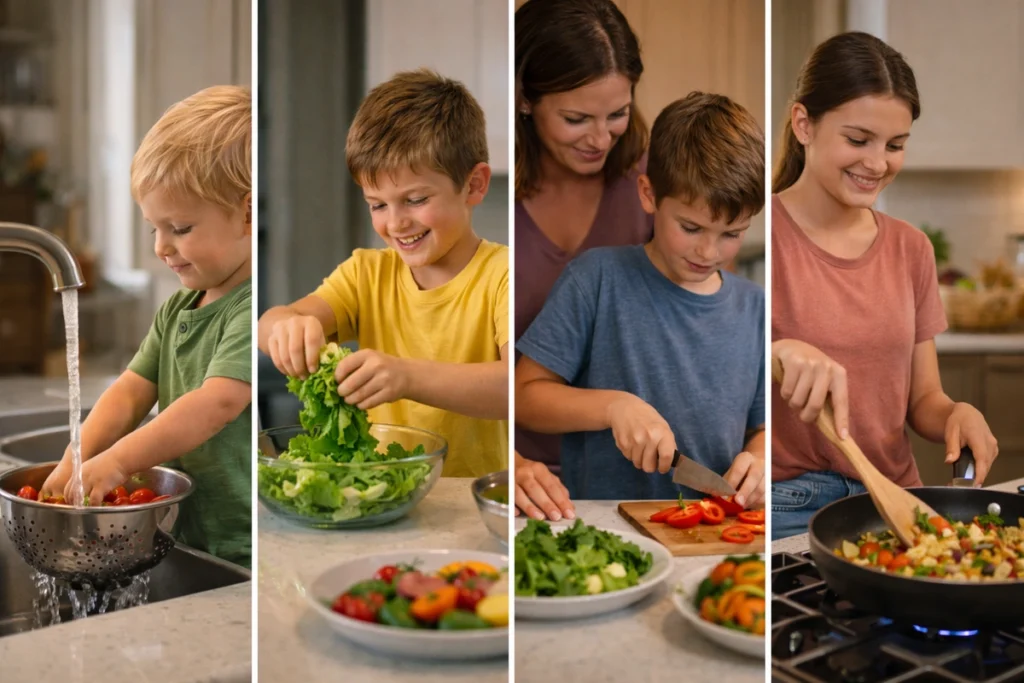
A three-year-old chopping carrots with a sharp knife sounds like a disaster waiting to happen. That’s because not every kitchen task is right for every age. When food activities match what kids can actually handle, everyone stays safer, and the experience feels successful instead of stressful. Here’s how that looks at different ages.
Toddlers to Early Elementary (Ages 2-8)
Young children thrive with simple, low-risk tasks that still make them feel like a real part of the process. Watering plants, picking ripe vegetables, washing produce in the sink, and tearing lettuce for salads are all solid starting points. Scooping ingredients like yogurt or mixing dry foods also works well for this age group (and yes, you should expect a mess).
When a five-year-old remembers washing the tomatoes they’re about to eat, that vegetable feels less random. These small moments help build motor skills and create positive associations with healthy eating without anyone getting frustrated.
Older Kids and Teens (Ages 9-18)
Older kids can take on bigger roles in the kitchen and garden. Think planning what to grow based on family preferences, researching plant care, and following multi-step cooking recipes. With supervision, they can also slice vegetables, measure ingredients, and manage harvest timing.
This level of responsibility teaches decision-making. A teenager who planned, grew, and cooked a meal understands food far better than one who just eats it.
When Parents and Caregivers Lead by Example
Kids tend to copy what adults do, especially at the dinner table. When parents fill their plates with vegetables and eat them without comment, kids learn that these foods are normal, not something to resist. Trying new foods calmly and without pressure shows children that curiosity is safe.
This applies to everyday choices, too. When foods like fish, nuts, or low-fat dairy appear regularly in family meals, they stop feeling like “healthy food” and start feeling like everyday food. The less attention you draw to eating well, the more it becomes the default.
Simple Tips to Support Food Responsibility at Home
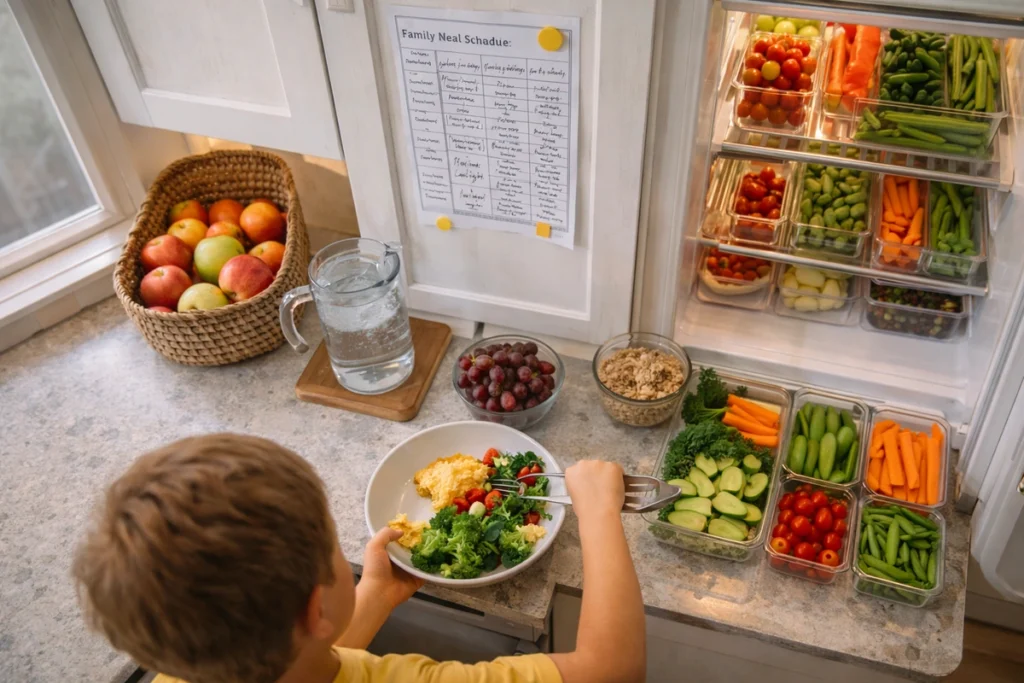
Small daily habits reinforce what kids learn from growing and preparing food. You don’t need a perfect system or elaborate routines. Below are a few consistent practices that help kids tune into hunger and make better choices:
- Set Regular Meal Times: Kids who eat around the same time each day develop natural hunger patterns. Their bodies start expecting food at certain times, which means they actually show up to meals hungry instead of grazing all afternoon and picking at dinner.
- Keep Water as the Default Drink: Make plain water the go-to option instead of juice, milk, or flavored drinks with every snack. When kids aren’t filling up on liquids with calories, they eat when they’re actually hungry. You also avoid sugar crashes between meals.
- Let Them Serve Themselves: Children often want control over their plates, so give them the chance to dish up their own portions at mealtime. This teaches them to gauge how much they want rather than cleaning a plate someone else filled. Some meals they’ll take more, others less. That’s how appetite works.
- Make Healthy Snacks Easy to Grab: Keep cut vegetables, fruit, or other simple snacks at eye level in the fridge. When kids can reach healthy options themselves, they’re more likely to choose them without asking permission first.
These aren’t rules to enforce. They’re just small adjustments that make food responsibility feel natural instead of forced.
Start Small, Grow Strong Habits
Food responsibility doesn’t require a full garden or perfect kitchen skills. It begins with one plant in a pot, one vegetable washed together, or one meal where kids decide their own portions. These small moments add up to children who understand where their food comes from and feel confident making healthy eating choices.
Pick one thing this week. Let your child water a tomato plant, rinse lettuce for dinner, or choose how much goes on their plate. Each step builds the foundation for lifelong habits.
Want more ideas to get started? Truck Farm Omaha helps kids explore food responsibility through hands-on gardening programs.