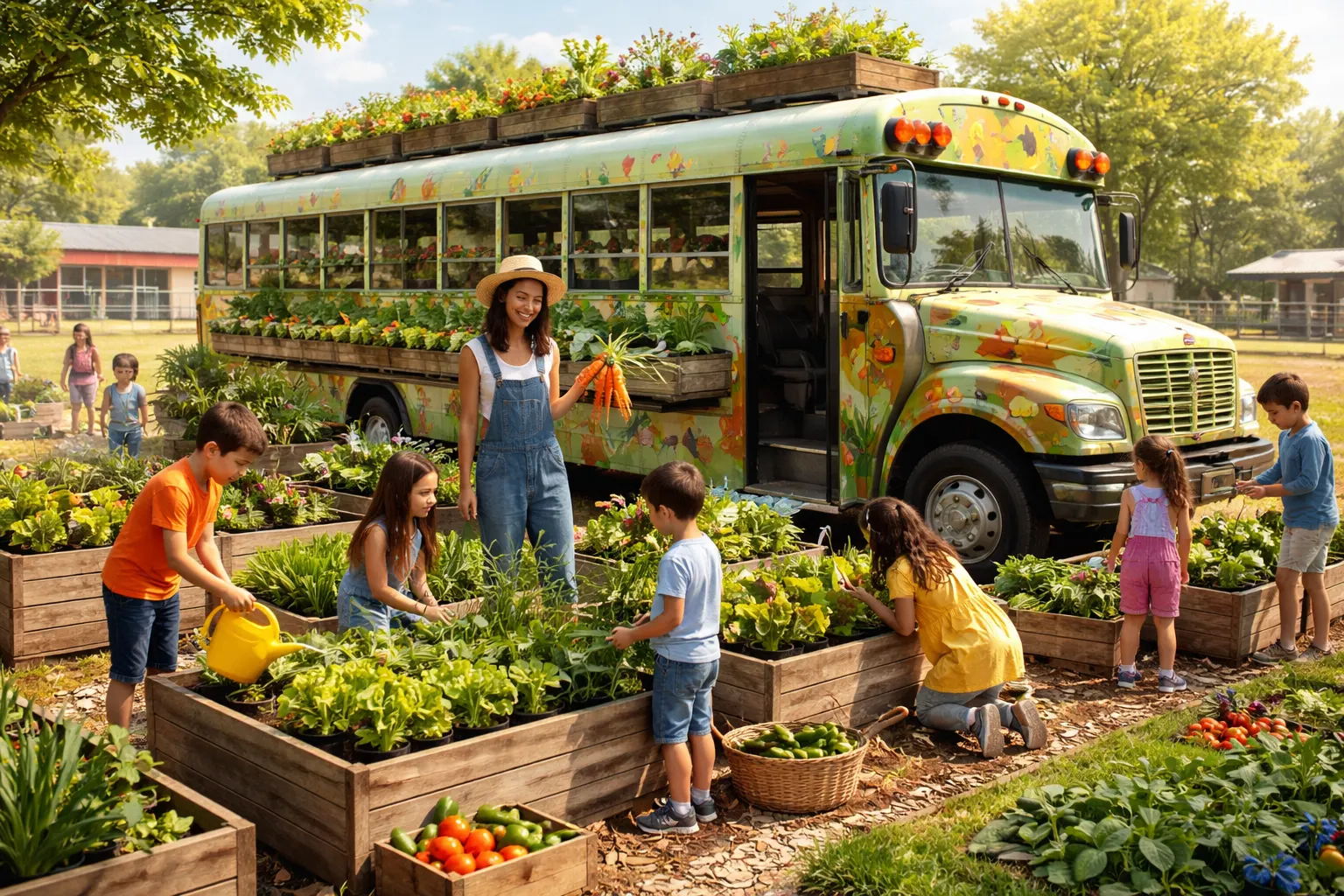
Mobile gardens are changing how kids learn about food in ways classroom lessons never could. Many children who previously avoided vegetables become more interested when they grow food themselves. And it works because most nutrition education stays theoretical, and kids tune out fast.
We’ve worked with youth programs facing this challenge. Getting children interested in healthy food feels impossible when they’re disconnected from where it comes from. But with garden programs, we’ve watched this impact shift completely.
Here’s what we’ll cover:
- Mobile gardens vs. traditional school setups
- Students learning nutrition lessons that stick
- Health benefits kids gain from growing food
- Programs helping prevent chronic diseases in the world
- Community groups starting gardens
Let’s see how mobile gardens create lasting impact.
What Are Mobile Gardens?
Mobile gardens are portable growing systems. They bring food education to students wherever they learn. Now you might be wondering how schools make this work without yard space. The answer can be explained in three parts:
Portable Containers
Farm setups move between locations, offering hands-on learning without permanent ground. This means students at home or community centers get the same experience, wherever the gardens go.
Shared Resources
Youth programs teach food literacy with portable planters, which is great because one garden can serve multiple community groups.
Hands-on Learning
Kids plant seeds, water crops, and watch growth happen right in their schoolyards. The best part is that photos document their progress while students figure out how much water each plant needs and watch their care create real impact.
These portable systems work differently from traditional school gardens.
Mobile Gardens vs. Traditional School Gardens
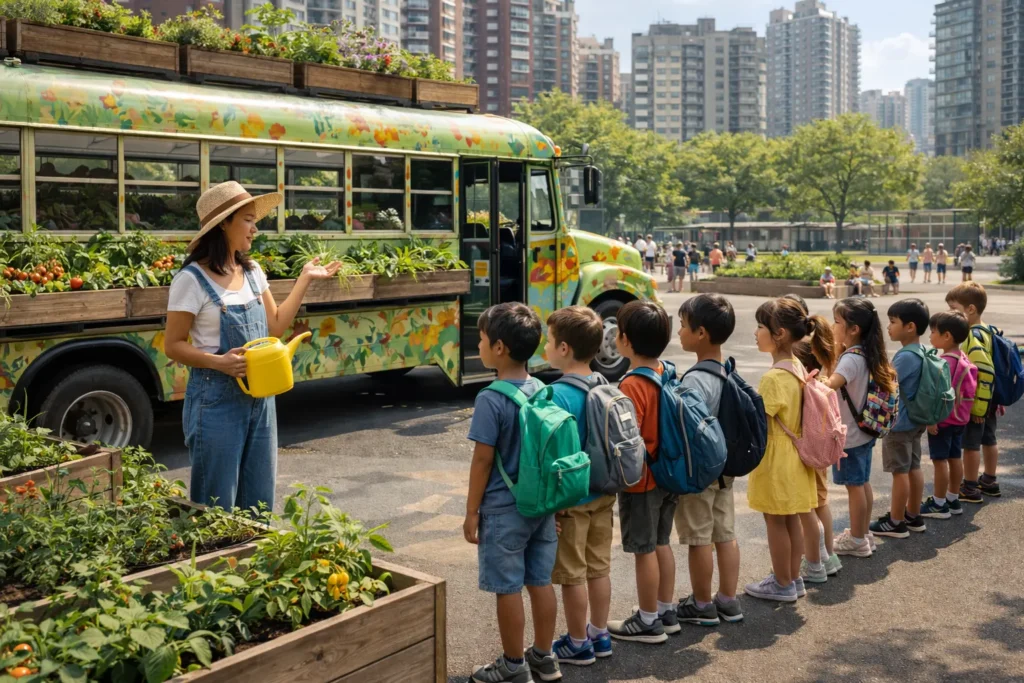
Mobile gardens meet students where they are, instead of making students come to them. Whereas traditional gardens stay fixed in one spot and limit classroom access throughout the year (and fixed gardens can’t follow students when they switch classrooms each semester).
Mobile systems relocate to different schools and community centers, which brings hands-on learning to neighborhoods that have never had garden programs in their history. This expands access for urban areas where ground space costs too much.
Portable setups also allow indoor growing during winter, extending the learning season by months. Schools across the world find that one mobile garden reaches more students than a permanent plot. That flexibility creates real community impact.
So how exactly do these portable gardens teach nutrition in ways that stick?
How Do Mobile Gardens Teach Students About Nutrition?
Mobile gardens teach students through hands-on experience with real food. Let’s be honest, most kids think carrots appear in bags. Planting seeds and watching vegetables grow changes how they see food completely.
Here’s how the learning breaks down.
Planting Shows Where Food Comes From
Children learn vegetables grow from seeds, not supermarkets. Research from Cornell’s garden-based learning program shows students develop better attitudes toward food through planting. Basically, kids who grow vegetables eat them more at home.
Harvest Connects Vegetables to Meals
Picking ripe tomatoes gets kids excited about eating fresh produce. That excitement carries into cooking activities. Students see how garden-to-table nutrition works and learn portion sizes when they help prepare what they grew during harvest events.
Composting Builds Environmental Awareness
Kids learn that food scraps turn into soil nutrients that feed new plants. This process shows them their direct role in sustainability. Photos also capture students exploring how yesterday’s lunch becomes tomorrow’s farm soil, and the experience teaches them about how natural cycles support sustainable food systems.
These lessons create health benefits beyond the garden.
Health Benefits Kids Gain From Growing Their Own Food
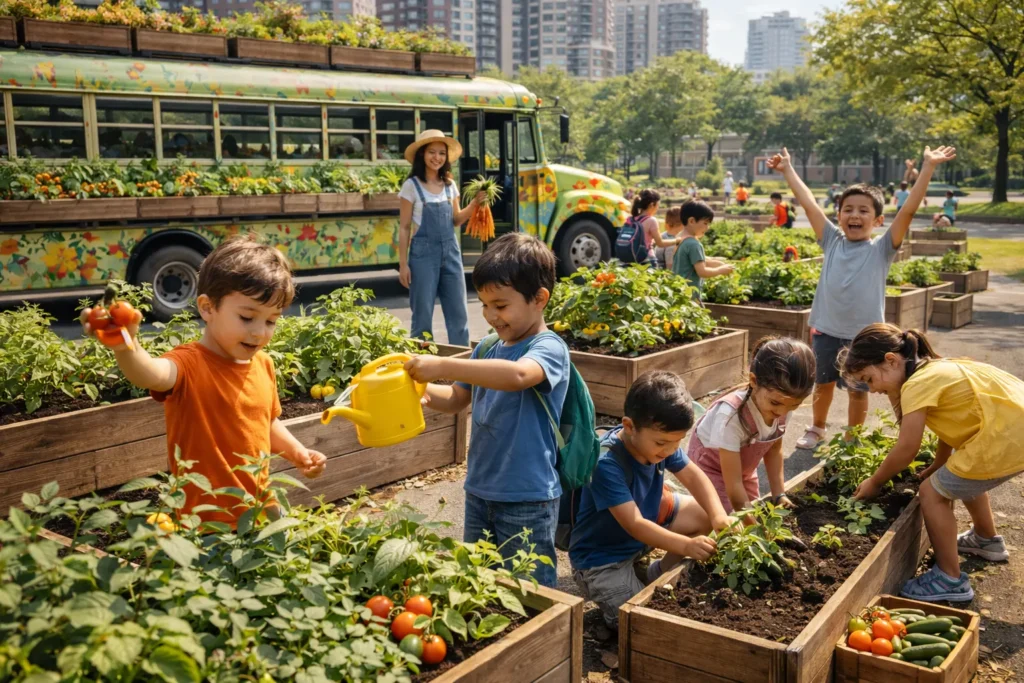
Growing food does more than teach nutrition. When students join garden activities, they start moving, thinking, and connecting with nature, and the health impact shows up fast (and yes, we’ve seen kids who won’t touch salad suddenly munching on lettuce they grew.) Three areas show the biggest changes.
- Physical activity builds strength: Gardening provides exercise through digging, planting, and harvesting. What’s more, youth learn that staying active means working outdoors during events, instead of sitting in gyms.
- Better eating habits form: Children who garden eat more fruits and vegetables than kids without this experience. The impact shows when students choose healthier foods at home.
- Mental health improves: Outdoor time reduces stress and sharpens focus better than indoor activities. Students connect with nature during these moments, which builds the resilience they carry into life.
These health benefits set kids up for long-term success beyond the garden, creating habits that protect their wellness for years to come.
Can Mobile Gardens Help Prevent Chronic Diseases?
Yes, mobile gardens can help prevent chronic diseases by teaching kids healthy eating habits early. And that’s where things get interesting. The eating habits children form now create lasting impact throughout their lives, which is why early nutrition education through gardening helps kids develop food patterns that stick with them.
The CDC reports that childhood obesity increases risks for type 2 diabetes, heart disease, and other health problems. That’s why children learning about fresh food through mobile gardens are less likely to develop obesity-related issues later.
Meanwhile, garden programs teach portion control, balanced meals, and diet variety that prevent disease. These lessons pay off down the road when kids start making their own food choices.
Plus, schools across the world find hands-on experience creates more impact than classroom information alone.
Setting Up a Mobile Garden: What Schools Need
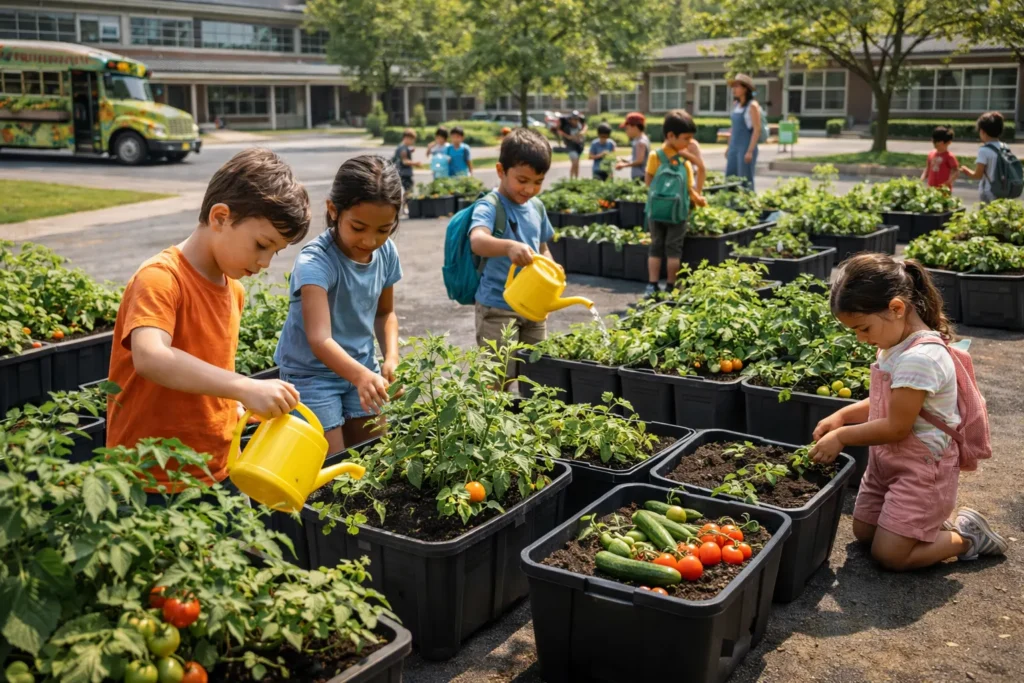
Now that you know how mobile gardens change food education, let’s cover what you need to get started. Schools can hit the ground running with basic supplies, and resources are simpler than teachers think.
Choosing Containers and Soil
Schools need food-safe containers with drainage holes. For instance, quality potting mix works better than garden soil because it drains properly. That’s why we suggest that containers be portable for students but stable to prevent tipping.
Information about materials is included in resources, and photos help teachers see what works.
Picking Easy-to-Grow Vegetables
Lettuce and cherry tomatoes shoot up fast. That quick growth keeps kids hooked because they see real results within weeks. Kale works differently, but just as well, since it forgives beginner mistakes, which means students can experiment without worrying they’ll kill everything.
Basil, on the other hand, brings instant rewards. Kids pluck fresh leaves for cooking lessons the same day they planted seeds, and that immediate payoff feels amazing when you’re eight years old.
Water needs also vary by plant, which helps teachers figure out which ones work best during events at home or school.
With these basics covered, you’re ready to see real results.
Real Results From Youth Garden Programs
Programs across the country are seeing changes in how kids eat and think about food. Believe it or not, some schools report kids asking for seconds of Brussels sprouts.
A systematic review of school gardening programs found that students increased vegetable consumption after hands-on activities. Programs report that 70% of students try vegetables they refused before.
Beyond eating habits, schools see improved focus after gardening. Teachers host events where students share photos and develop leadership by teaching younger students. And when communities host activities, the experience creates a lasting impact that teachers see long after harvest events end.
Start Growing With Your Kids
Getting kids excited about vegetables feels impossible when they’re disconnected from where food comes from. That’s what mobile gardens solve by bringing farm education directly to youth in any community. Schools and families have access to simple systems that build lasting nutrition impact.
We’ve covered how mobile gardens teach students through planting, harvesting, and composting. You’ve seen the health benefits kids gain and how programs help prevent chronic diseases, while setup remains straightforward with basic resources.
Your community can start today. Join Truck Farm Omaha, and our team will take you through every step you need to launch a successful youth garden program.