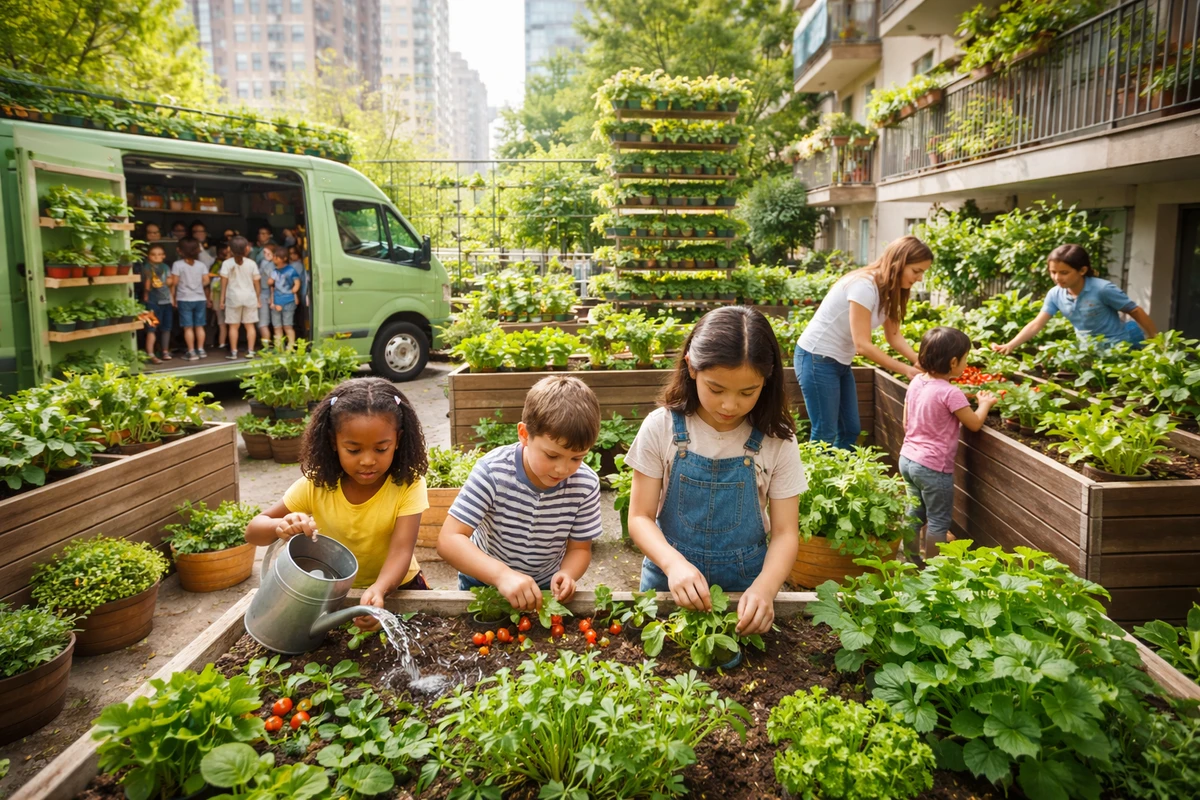
Cities are growing food vertically and setting up farms inside schools where students spend most of their time. These small-scale gardening squeezes surprising harvests from balconies and parking lots.
In fact, a multi-year study of NYC community gardens found that urban agriculture produces about one-third pounds of fresh food per square foot. And the space limitation actually helps when programs focus on teaching kids instead of commercial production.
This article covers mobile farm models, space-saving methods, and how rolling gardens show up at schools. You’ll also see why urban farming ideas beat traditional farm field trips for food education.
Let’s find out how tight spaces create smart solutions across the city.
What Urban Farming Looks Like When Your Yard Fits on a Truck
Urban farming in tight spaces works through mobile gardens, vertical growing systems, and container setups that produce food without acres of land. These small-scale agriculture methods bring fresh vegetables right to urban neighborhoods.
Take a look at how these rolling gardens operate.
Urban Agriculture Brings the Garden to You
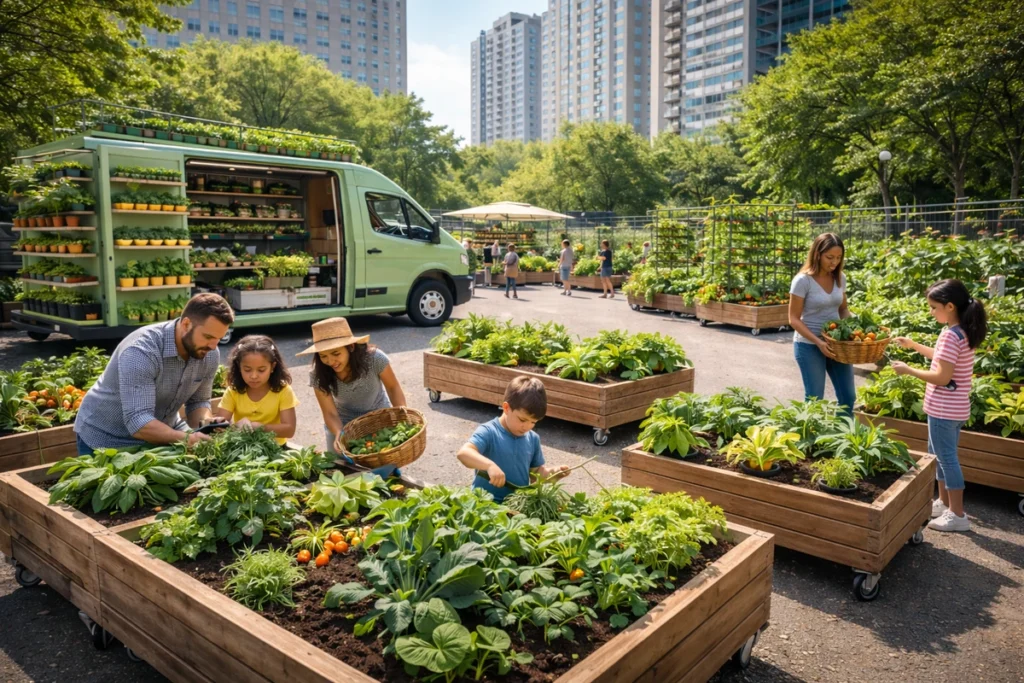
Portable farms arrive at schools in truck beds that are filled with soil, plants, and teaching tools. Then, kids interact with vegetables growing in those raised beds without needing permanent garden space at their location.
These programs usually schedule visits around planting seasons. They bring hands-on education when it’s most beneficial for learning about crops and food systems. And teachers don’t need to maintain gardens year-round or worry about watering schedules during summer break.
Why This Model Works for City Living
Dense neighborhoods might not have any room for traditional farms, but they have plenty of parking lots where mobile setups can roll in without hassle. These portable gardens avoid zoning issues plus property ownership complications that block permanent community gardens.
Instead, communities share one farm rather than each location building separate growing spaces from scratch. Furthermore, the same mobile setup can serve multiple schools and events across different neighborhoods throughout the growing season.
Urban Farming Ideas When You’re Short on Square Footage
Research from UCLA found that urban gardens in Los Angeles County produce an average of 1.9 pounds of food per square foot annually. To make that possible, urban gardening in a balcony or a patio needs stacking plants upward. It’s also good to choose high-yield crops that produce more food per square foot.
Here’s what actually works in tight spots:
- Vertical Growing Systems: Trellises can hold vining crops like peas, beans, and cucumbers against walls or fences without taking up ground space. Especially, south-facing surfaces increase sunlight exposure and free up the soil below for smaller plants. You’d be surprised how much fits when you grow up instead of out.
- Container Gardening: Pots and containers are perfect for balconies, rooftops, patios, and even windowsills to grow vegetables year-round. Usually, containers need six inches of depth for shallow plants, and one foot for deeper-rooted vegetables. This way, roots have room to spread and access nutrients properly.
- Intensive Planting Techniques: Intensive methods let urban farmers grow more produce in less space than traditional row gardening. For instance, fast-growing greens like arugula, lettuce, and radishes produce harvests in weeks, not months. Plus, planting densely between rows maximizes every square foot instead of leaving empty gaps.
Bonus Tip: Drainage holes prevent root rot, while potting soil provides better water management than ground soil. Along with that, adding a layer of small stones at the bottom of the pot helps extra water drain away and keeps the roots from sitting in too much water.
Using Waste as a Resource for Year-Round Urban Gardening
A great thing about urban gardening is that it doesn’t stop when outdoor space runs out or winter arrives. It’s because strategic urban farmers use composting to build soil and hydroponic systems to grow food indoors, regardless of season or weather conditions.
Let’s look at how waste becomes resources.
Composting Kitchen Scraps for Better Soil
The EPA reports that only 5% of America’s food waste gets composted, while the rest ends up in landfills, producing methane.
However, this food waste from kitchens can be nutrient-rich organic matter that feeds plants naturally without store-bought fertilizers. To give you an idea, banana peels, coffee grounds, and vegetable scraps break down into material that improves soil structure and water retention
When you compost them, it reduces what goes to landfills while creating the black gold soil that urban gardens need to thrive. Besides, compost bins fit on balconies or under sinks in small apartments without taking up growing space.
Indoor and Hydroponic Growing Options
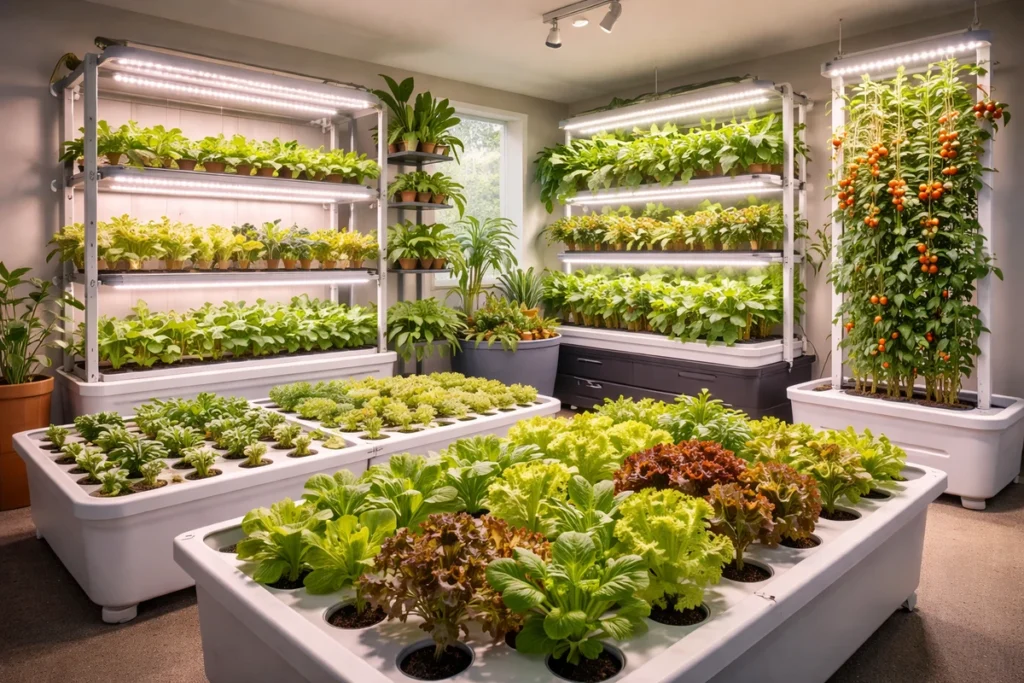
Hydroponic systems let urban farmers grow vegetables indoors using water and nutrients instead of soil. These setups work in basements, spare rooms, or even closets with grow lights providing the energy that plants need year-round.
In practice, hydroponic gardens produce faster-growing crops like lettuce, herbs, and greens in smaller footprints than traditional gardening methods. This way, urban agriculture extends beyond summer months when indoor systems keep food production going through cold Omaha winters.
Not to mention, hydroponic systems reduce water usage by up to 90% compared to traditional soil gardening methods.
Building Food Knowledge Beyond Just Growing Plants
Kids gain more than just gardening skills from urban gardening programs. In fact, they teach broader lessons about health, environment, and community connection that stick with students long after harvest season ends.
This is what happens beyond the planting.
Teaching Soil Health Basics
Children learn about composting by seeing food scraps become nutrient-rich soil over time. These hands-on activities show how healthy soil creates strong plants that resist pests naturally without chemical sprays.
Understanding soil biology also connects them to larger conversations about environmental stewardship (protecting nature through responsible practices). Plus, students discover how organic materials feed beneficial microorganisms that keep gardens thriving.
Connecting Kids To Where Food Comes From
Most urban kids have never seen this connection because they never see food growing before it appears in grocery stores. That’s why direct experience with planting and harvesting breaks the distance between farms and tables.
Besides this, research shows that school gardens increase students’ willingness to taste vegetables and improve their nutrition knowledge significantly. The youth also develop an appreciation for farmers and the work required to produce meals. And this understanding often leads to healthier eating habits and less food waste at home.
Creating Community Through Shared Gardening
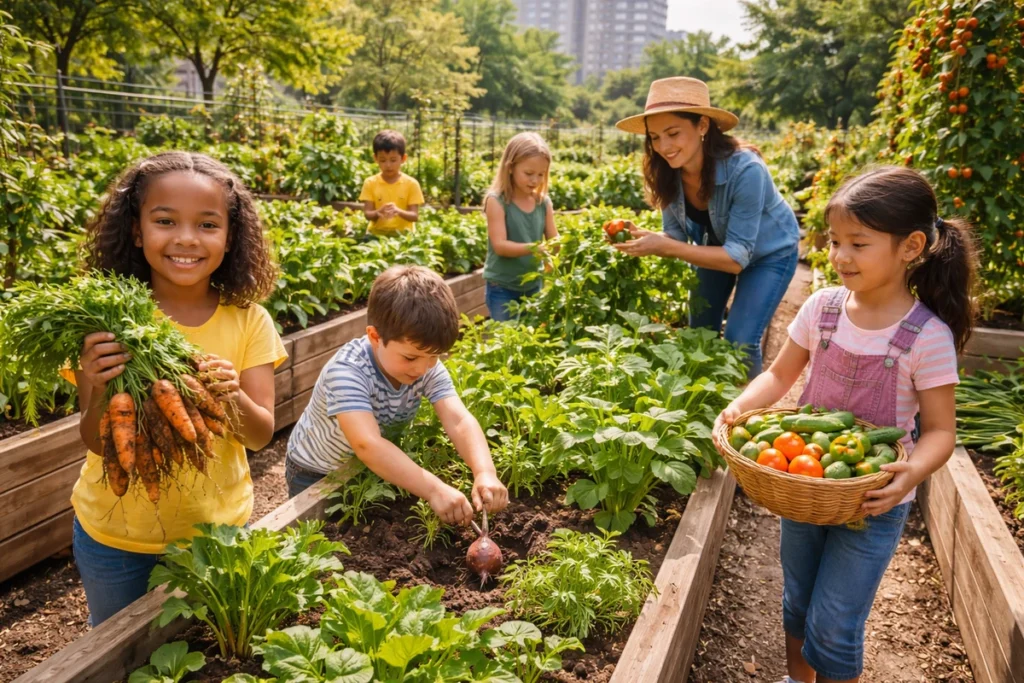
Shared gardening allows families to attend events together and learn gardening skills they can later practice at home in their own small spaces. While running community garden events across Omaha, we’ve seen the joy of neighbors volunteering at collaborative planting sessions.
These harvests bring people together over fresh food and cooking demonstrations. In short, urban agriculture builds stronger neighborhoods through collaboration and access to local food resources.
Start Growing Food On Your Patch
Urban farming works in limited spaces through vertical systems, containers, and mobile education programs that bring agriculture directly to neighborhoods. Furthermore, small gardens teach kids about nutrition and where food comes from better than classroom lectures alone.
Mobile farm programs like Truck Farm Omaha bring gardening education directly to schools and neighborhoods across the metro area. These programs prove you don’t need land ownership to teach children about healthy eating habits and food systems.
So start with container gardens on your balcony or participate in community growing events happening around your city. Choose fast-growing crops, stack plants vertically, and focus on education alongside food production. Your small space can grow both vegetables and food literacy.