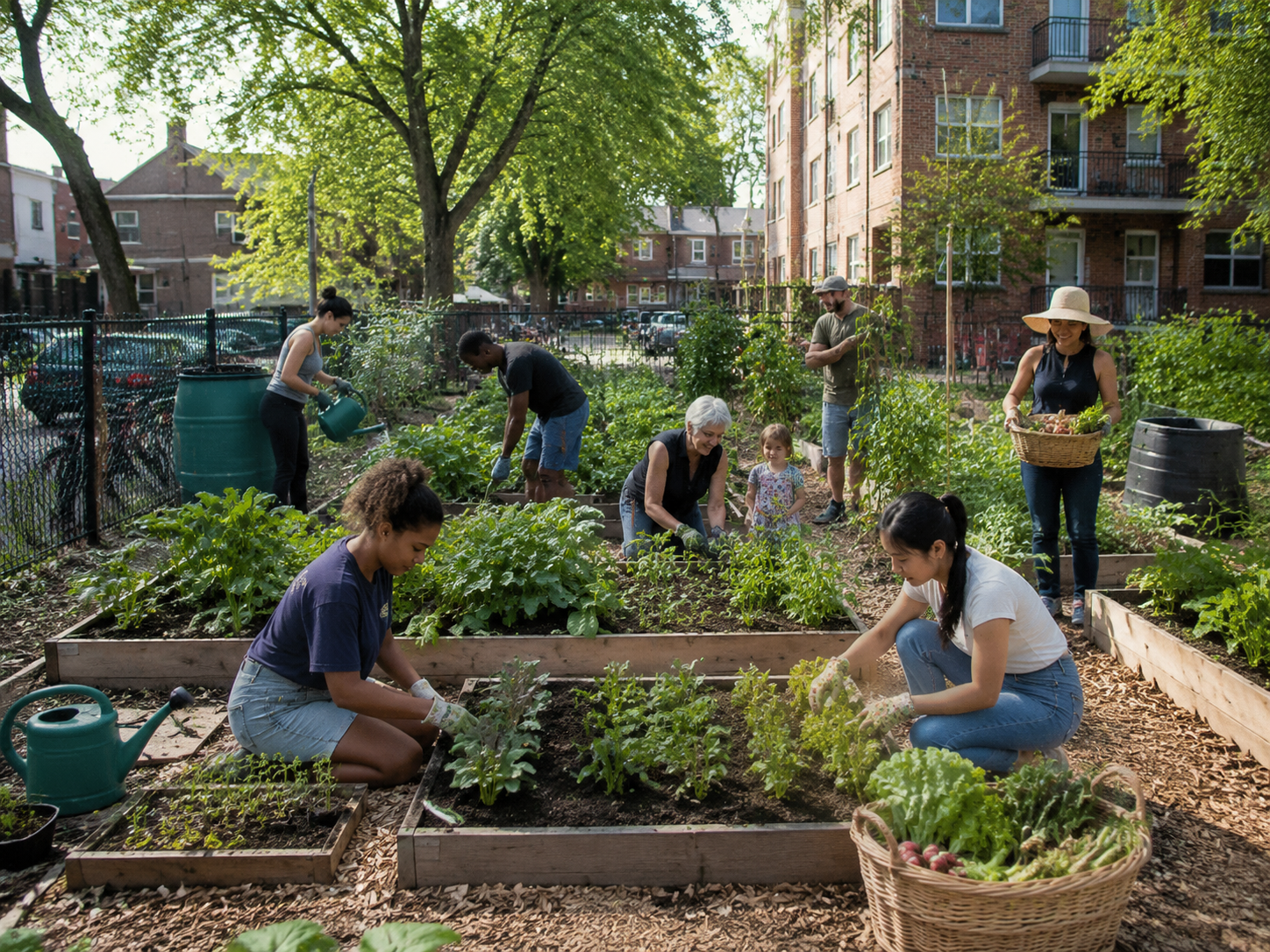
Urban gardening projects teach kids about food and sustainability by connecting them directly to the growing process. But many children in Omaha miss that connection because most families don’t have access to a backyard garden, and school lessons often stay within the classroom.
Truck Farm Omaha addresses this gap by bringing mobile gardens into schools and community spaces. Through our hands-on sessions, kids plant, grow, and harvest their own food. They also learn what healthy, sustainable food looks like before it reaches their plate.
In this article, you’ll learn how garden projects influence the way children eat and think about food. So if you’re a parent, teacher, or community member curious about what these programs do, keep reading.
Urban Gardening Projects: What Kids Actually Learn From the Dirt Up
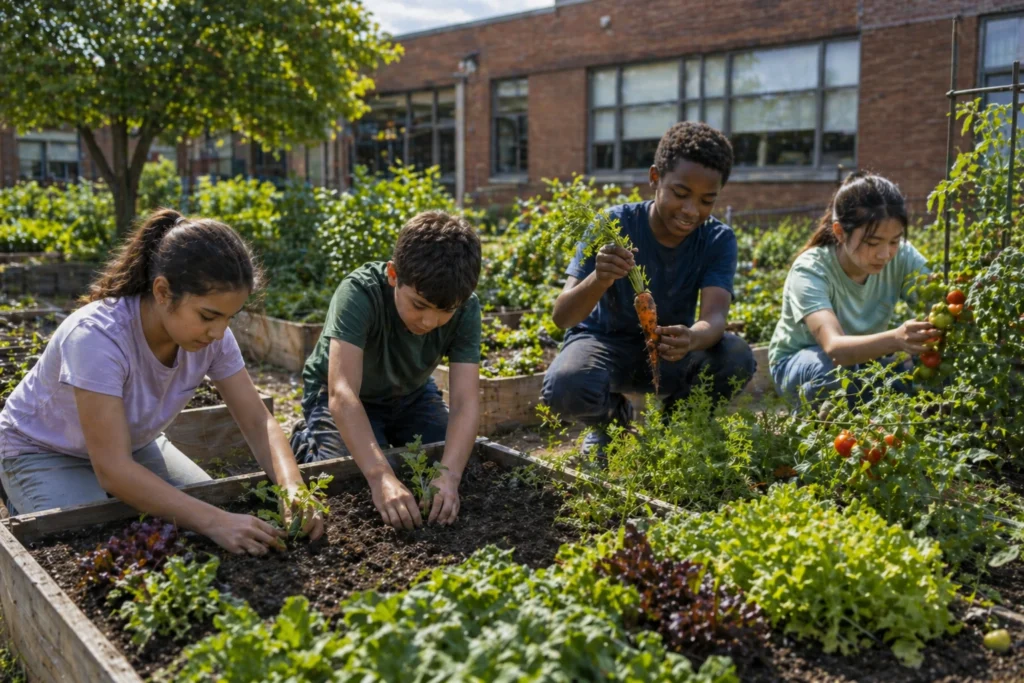
Most people picture a garden and think of dirt, seeds, and maybe a few tomatoes. But the knowledge kids pick up from real garden work goes much deeper than that.
Students who spend time in a school garden begin to understand how science, food, and daily choices connect in ways a classroom does not always show.
Here are the two main takeaways that children learn through this experience.
Knowing Where Food Comes From
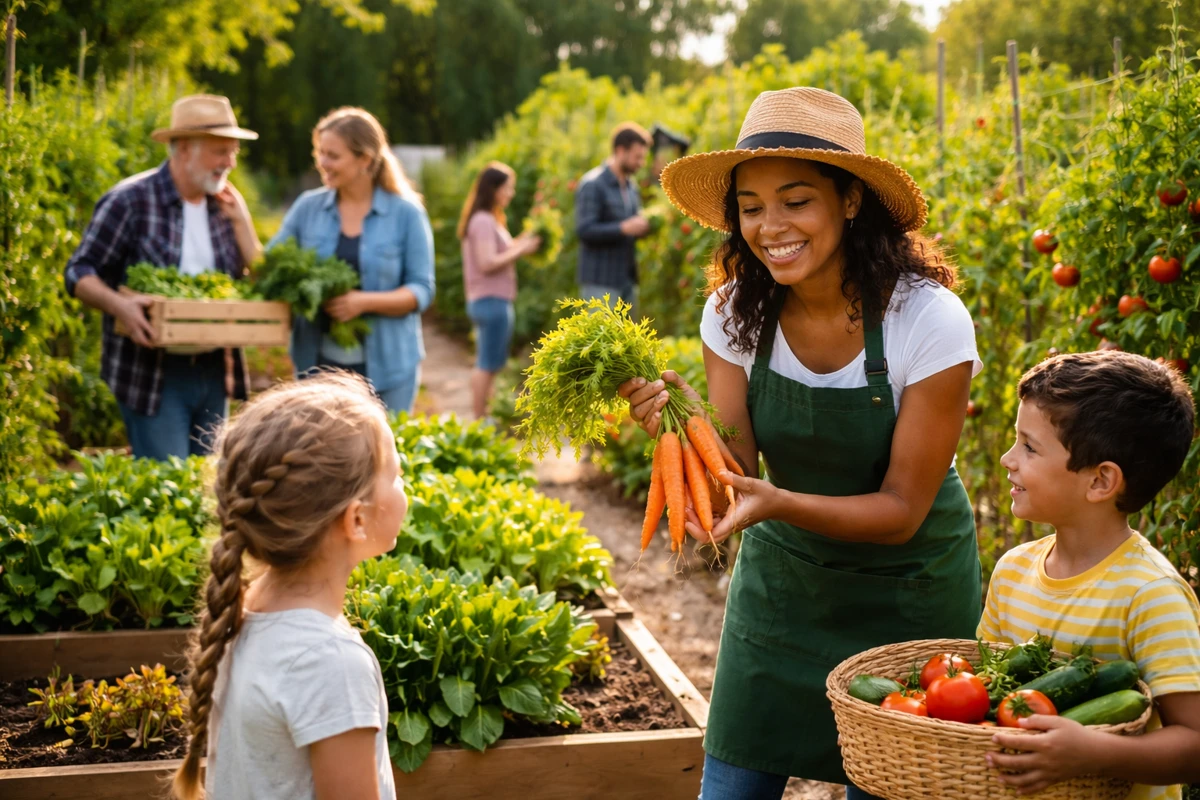
Ask any kid where carrots come from, and you’ll get some interesting answers (we’ve heard kids who genuinely believe carrots come from a factory somewhere near the cereal aisle). But once they see vegetables growing in real soil, they quickly realise where food actually comes from.
When children care for a garden and watch plants grow from seeds, they start to see food differently. Besides, harvesting what they’ve grown creates a stronger connection to their food choices, and that awareness stays with them long after the season ends.
Nutrition Education That Sticks
Traditional nutrition education often stays limited to charts, food pyramids, and handouts. Kids look at them and forget them soon after.
But gardening offers a more hands-on way to learn here. When students grow healthy foods themselves, they become more curious about nutrients, diet, and what they put into their bodies. From what we’ve seen, Truck Farm Omaha kids learn beyond what a vegetable is. They grow it, pick it, and often choose to eat it.
School Garden and Healthy Eating: A Connection Worth Growing
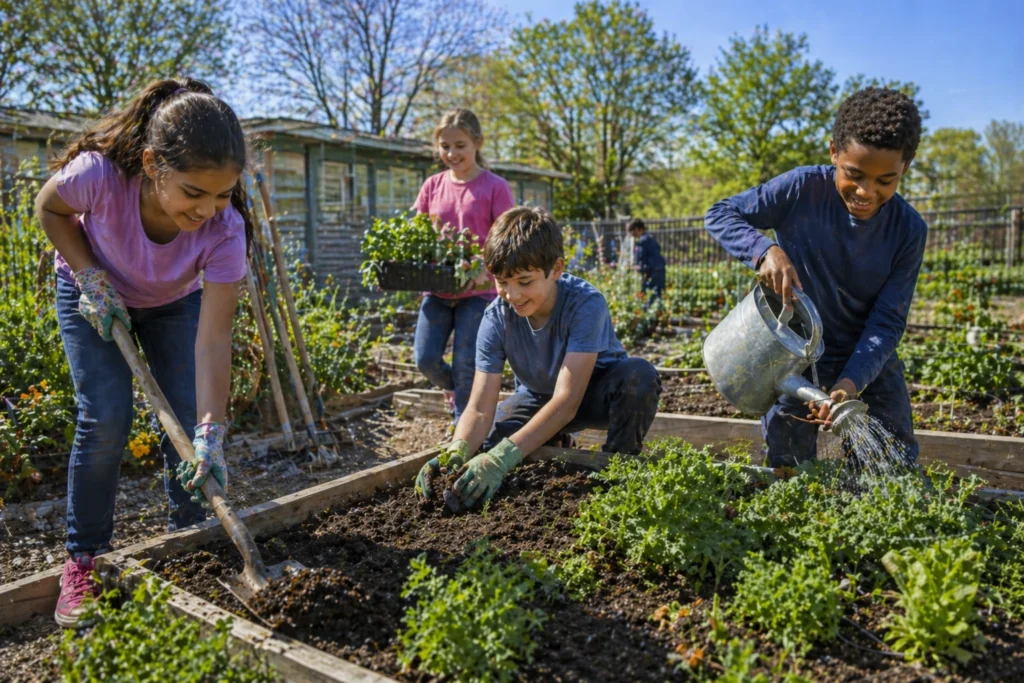
School gardens make healthy eating feel like a natural choice instead of a rule to follow. When kids grow and harvest their own food, they become more willing to try and enjoy it. They also help kids connect what they grow with what they eat and how they make food choices during the day.
You can see this connection in two basic ways:
How School Meals Connect to Garden Lessons
When kids grow up producing the ingredients used in school meals, their response to food begins to change. They start to engage with what is on their lunch tray with more interest.
Drawing from our experience working with Omaha schools, we’ve seen how students approach their meals differently after growing their own food.
Garden-to-cafeteria programs also help children see food as something worth caring about. Teachers and lunch staff can then reinforce the same nutrition ideas across the classroom and cafeteria to create a consistent learning experience. This kind of repetition across different settings supports long-term understanding in students.
Building Healthy Breakfast Habits Early
Generally, breakfast habits formed in childhood follow kids till their teen years. And parents don’t realize how early those patterns can develop, or how much a school garden program can influence them.
To adapt these habits early, garden programs highlight morning foods like fruits and vegetables that give healthy breakfast choices in a real context (kids who’ve grown strawberries don’t need much convincing to eat them at breakfast).
When children understand where food comes from, they are more likely to make healthier choices at home, starting with the first meal of the day. And families who continue these conversations at home often see their kids build stronger and more consistent habits over time.
Physical Activity and Urban Gardening Kids Love
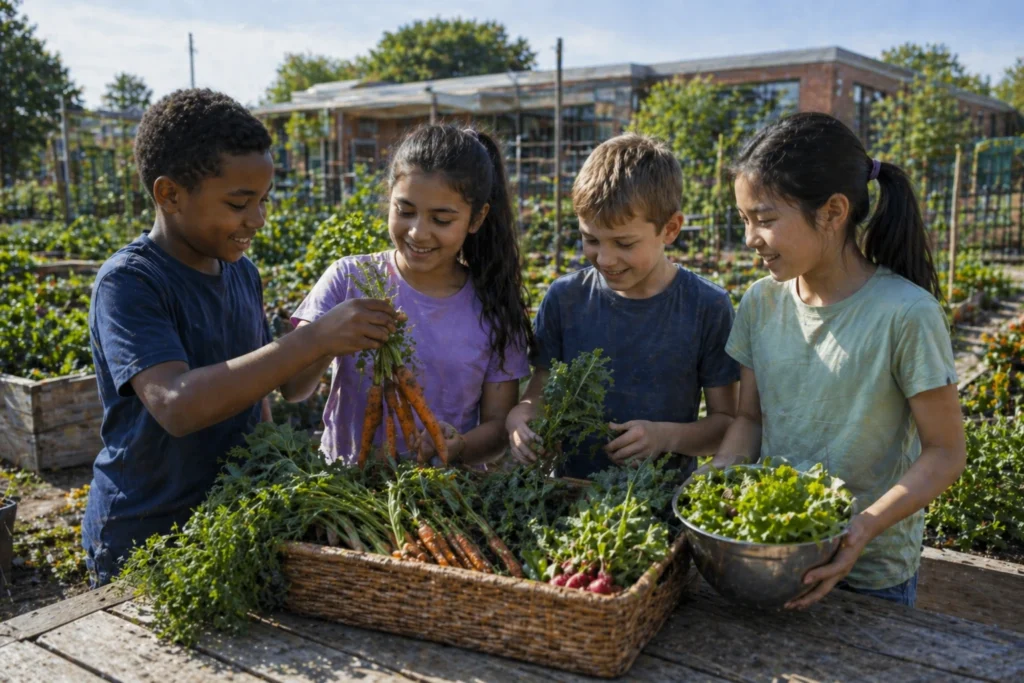
Have you ever noticed how kids never complain about being tired when they’re doing something they actually enjoy? Well, that’s exactly what happens in a garden setting.
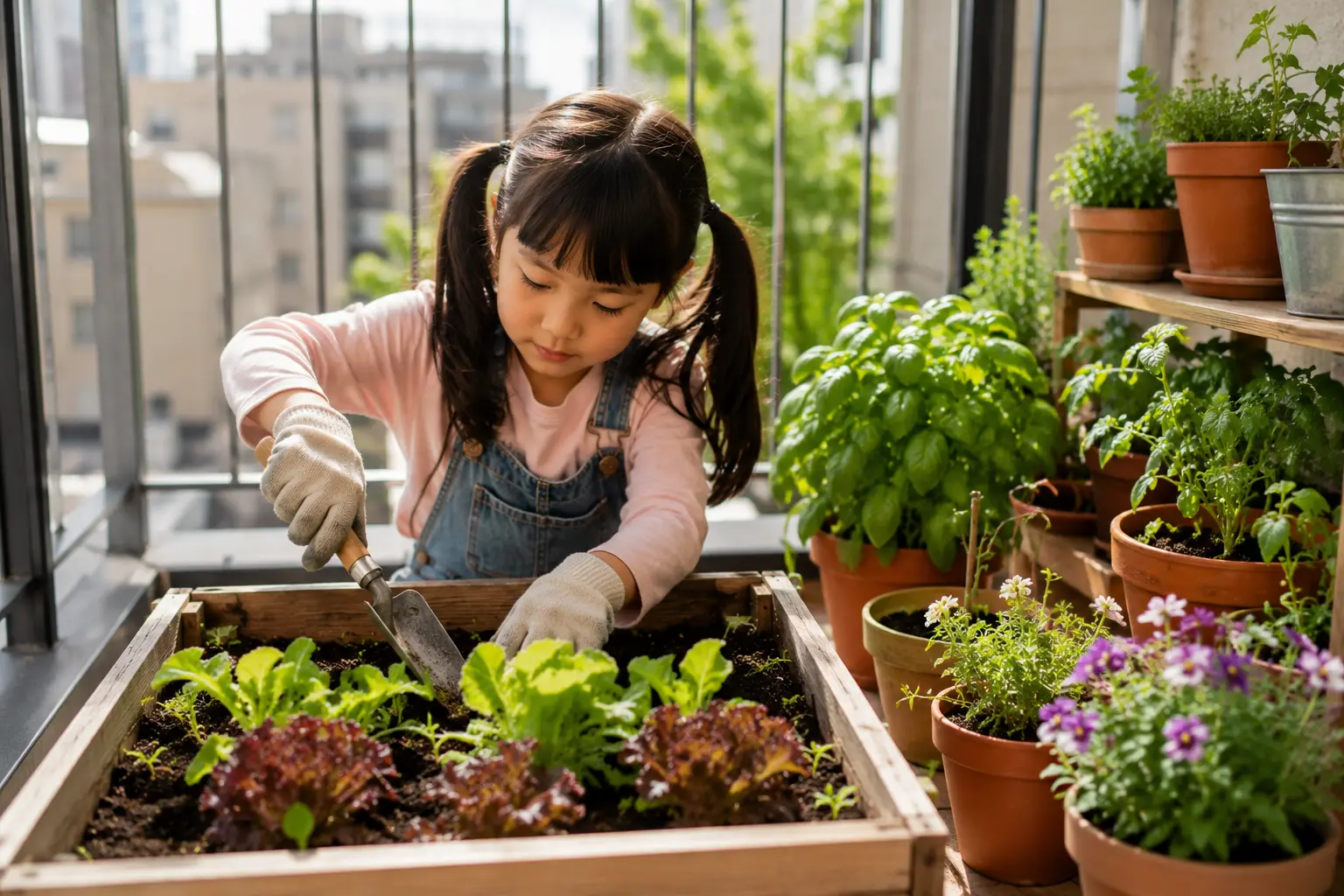
In gardening, physical activity doesn’t always look like a gym class or a sports field. Digging, carrying, planting, and watering all count as real movement here. And for kids, it feels like part of the fun activity rather than a separate task.
Regular outdoor garden work helps children develop gross motor skills and build energy that keeps them moving through the school year without burning out.
The environment also supports this kind of physical activity. In fact, being outside in a green space gives adolescents and younger kids both a mental reset from classroom activities. On top of that, research shows outdoor physical activity supports both focus and emotional well-being in students.
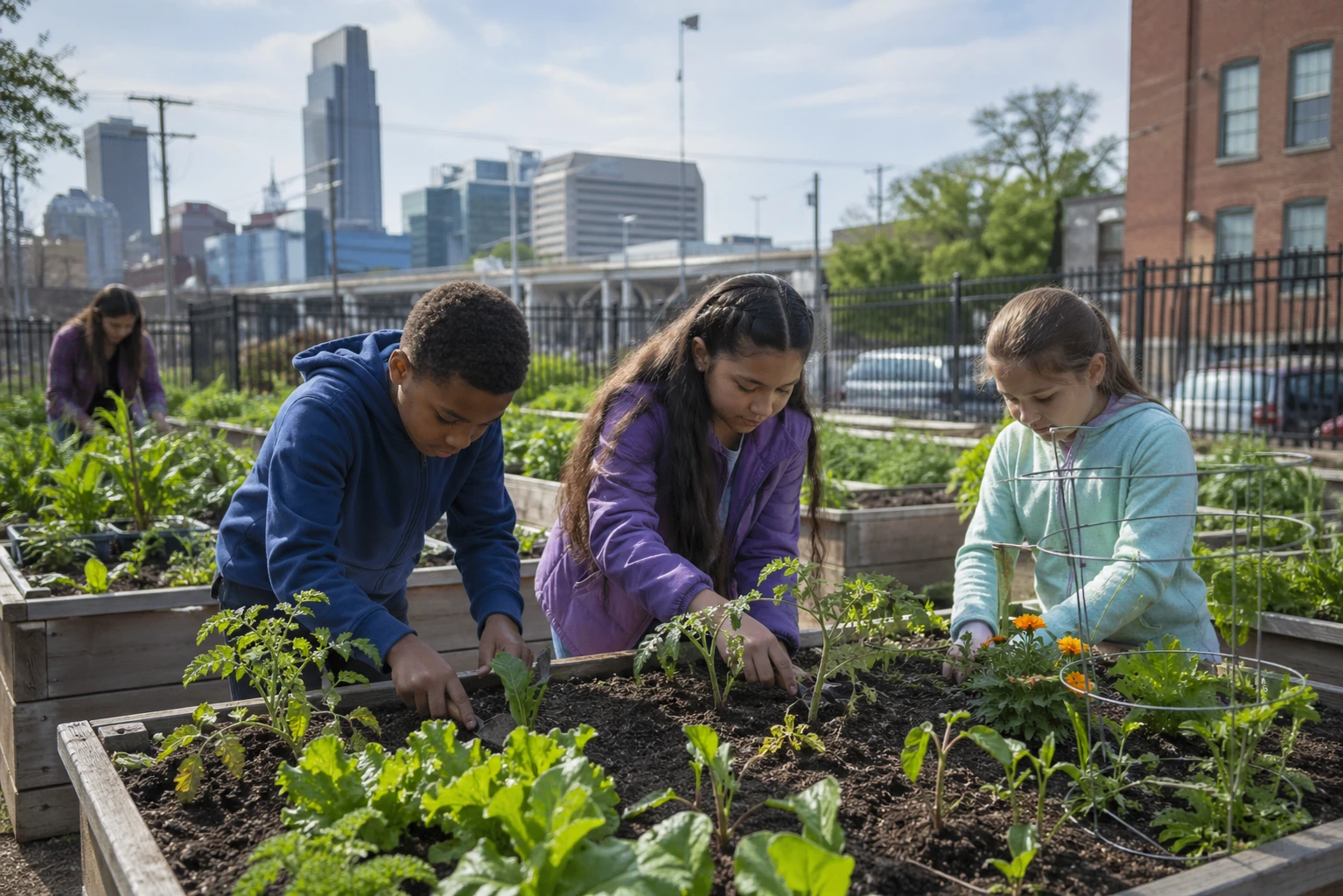
With urban gardening, kids even use real tools, take part in tasks, and learn through movement. This combination of activity and learning is exactly why kids keep showing up to the garden, session after session.
Can a School Garden Change How Kids Eat?
As we already mentioned, school garden programs influence how children approach food, nutrition, and their own eating habits. And those changes sometimes appear sooner than many parents and teachers expect.
However, if we move from the physical side of gardening, the next question most parents ask is whether any of this actually changes eating habits.
Let’s have a look at what the data and our own experience point to:
- Trying New Foods: Children in school garden programs often show a stronger willingness to try fruits and vegetables they previously avoided. Once they try them, repeated exposure makes those foods feel more familiar, so they are more likely to include them in their regular meals.
- Showing Real Behaviour Shifts: Many kids in our program who wouldn’t touch a tomato before come back within a few weeks and start asking when they can plant more. This happens because growing the food removes hesitation and builds familiarity.
- Findings from Universities: Studies from universities across the country show that garden-based nutrition programs improve healthy eating behaviours. So you build higher fruit and vegetable intake and a better understanding of balanced meals.
- Supporting Disease Prevention: Early nutrition education in garden settings reduces long-term diet-related health risks in children and adolescents. They even carry such habits into later years, which lowers the chances of issues linked to a poor diet.
- Improving Food Literacy: With long-term participation, students begin to understand, choose, and talk confidently about their food. As a result, they make informed decisions instead of relying only on convenience or habit.
- Building Emotional Connections to Eating: When kids grow their own food, they develop a stronger and more positive relationship with healthy options. This shows up during meals, where they are more open to eating what they have grown.
Based on what we witnessed across multiple growing seasons with Truck Farm Omaha, the garden changes both eating habits and how children think about food. So if your child’s school does not have a garden program, it may be worth raising at the next parent meeting.
Grow Curious Kids, One Garden Bed at a Time
Now that you’ve seen what urban gardening projects can do, the next step is getting kids into the dirt. These projects teach children far more than plant names. Kids often leave with sustainable habits, a healthier relationship with food, and a curiosity about the world that sticks with them.
The importance of early nutrition education, physical activity, and access to fresh food isn’t something society can afford to ignore. That’s why school garden programs give families and teachers practical ideas and resources to promote healthy eating from a young age.
Truck Farm Omaha is doing the same thing, right here in Omaha. If you want your child to learn the benefits of growing their own food, explore our programs and find out how your family can get involved.
Remember, the garden is open, and there’s always room for one more curious kid.