Pollinator gardens belong in children’s food education programs because they put the connection between food and pollinators within arm’s reach. Kids can watch bees do the work that grows their lunch.
A worksheet or a grocery store shelf can’t give kids that direct view. At Truck Farm Omaha, we grow food where kids can see each step between seed and supper. And this guide covers why pollination belongs in food lessons.
We’ll look at what kids learn from watching bees, how to plan around a school calendar, and which pollinators help grow which foods. Let’s start with the why.
Why Does Food Education Need Pollinators in the Lesson?
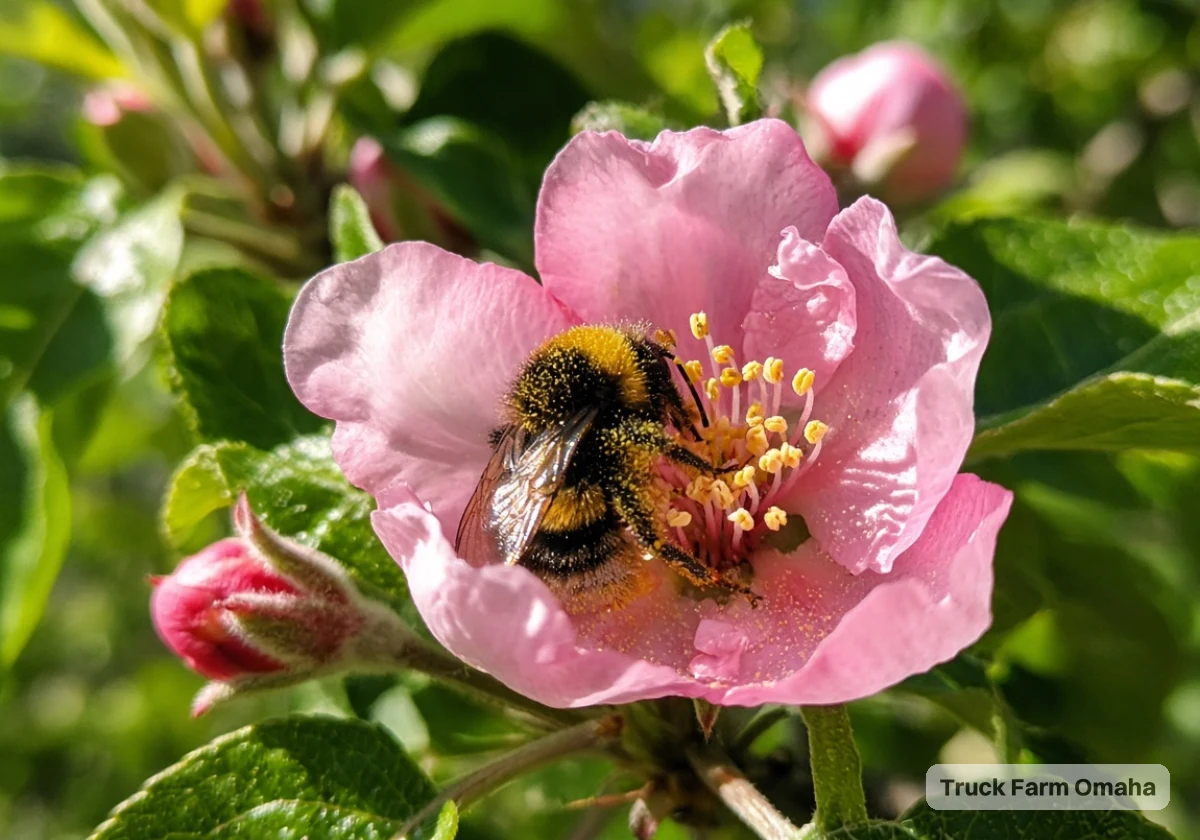
Most fruits, nuts, and many vegetables only grow after an insect or bird visits the flower. That visit moves pollen from one blossom to another so the plant can form seeds and fruit.
The U.S. Fish & Wildlife Service estimates that a large share of the world’s food crops depend on animal pollinators to reproduce. Yet, you can hear that gap in how kids talk about food. Plenty of children can name a farmer, a tractor, and a grocery store, but few can explain why a pumpkin vine needs bees. If you’re mapping out what food education programs teach kids, teaching children about pollination fills in the missing step between planting a seed and picking a pumpkin.
Once kids grasp how much of their lunch rides on pollinators, the next move is letting them see it up close.
Pollinator Garden for Kids: What Children Learn When They Watch a Bee at Work
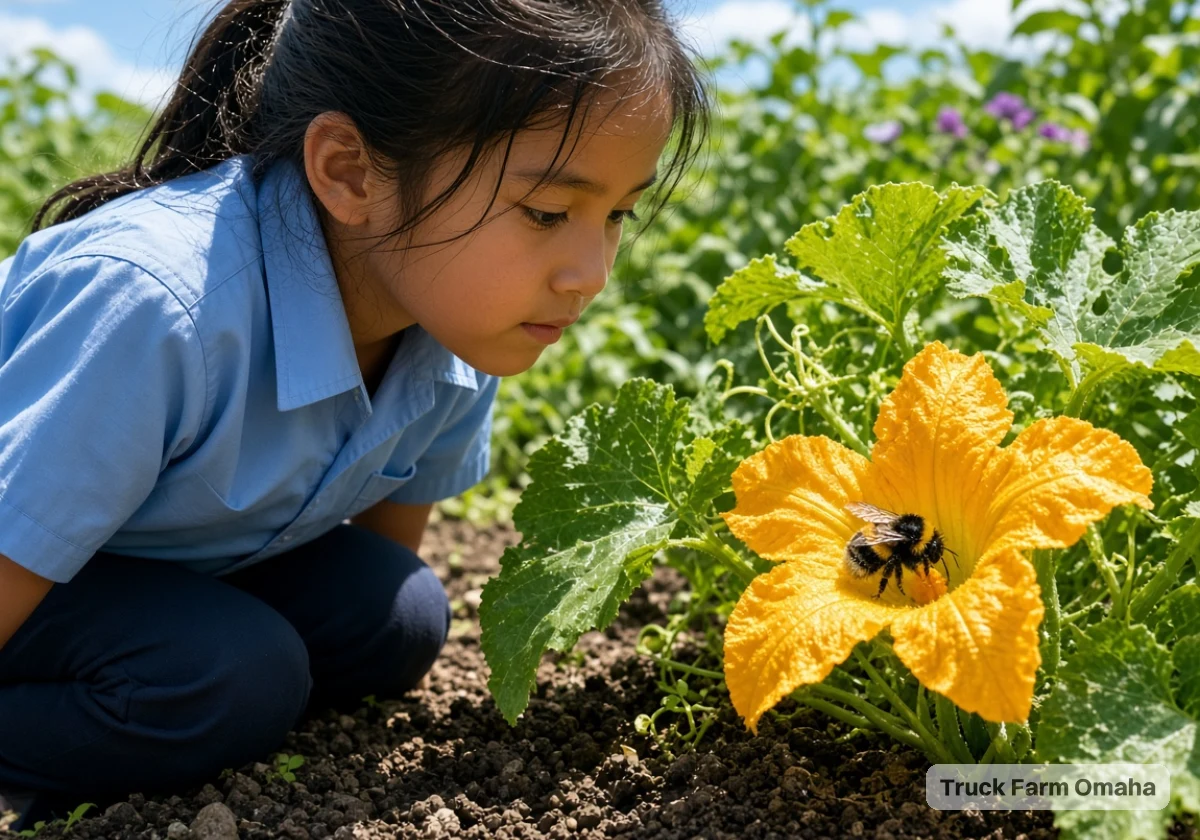
Watch a bumblebee crawl out of a squash flower once and you’ll never forget where food comes from. USDA researchers confirm that bumble bees are among the main pollinators for greenhouse crops. The same insect a child watches in the garden also feeds the tomatoes in their winter salad.
Below, we’ve explained the pollinator education activities that come straight out of a garden bed once kids start paying attention.
Counting Flower Visitors Teaches Observation
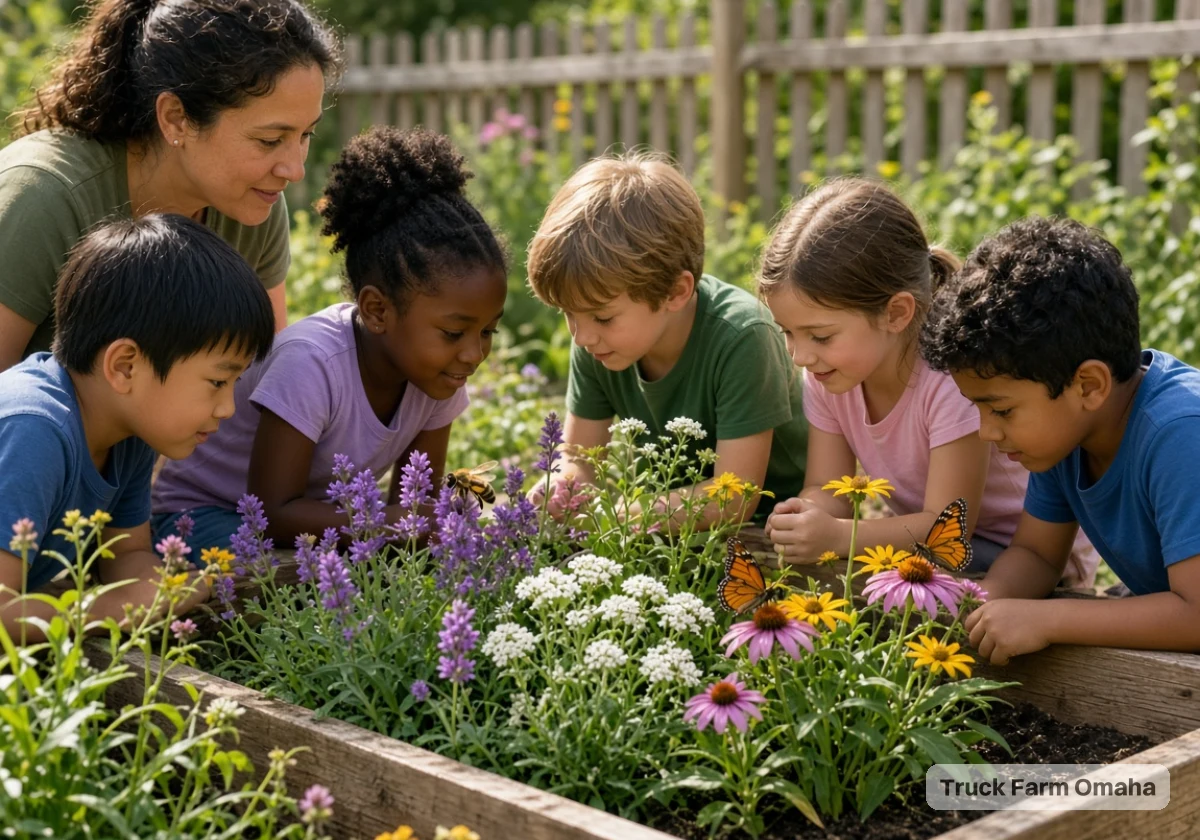
Counting visitors gives kids a simple job: pick one plant, watch for five minutes, and tally every insect that lands. They’ll quickly notice that bees, flies, and butterflies don’t all move the same way.
From there, keep the tally sheets in one folder so the class can compare counts across weeks (clipboards survive muddy knees far better than spiral notebooks do). Those numbers will become the group’s first real data set.
Following Pollen From Blossom to Fruit
Once kids can count the visitors, they’ll want to know what those visits produce. Squash and cucumbers make this lesson easy because their flowers are big and they are quick to harvest. Kids can spot the tiny fruit sitting behind a female flower and watch it swell after a bee visits.
On the flip side, a baby squash that shrivels and yellows often means the flower never got enough pollen. Have kids tie a loose twist tie on visited flowers, then check them a week later to see which ones grew.
Matching Plants to the Pollinators They Attract
The shape of a flower also affects which pollinators it attracts. Tube-shaped blooms like bee balm draw hummingbirds and long-tongued bees, while flat clusters like yarrow suit small bees and flies.
To test this, give kids photo cards of common visitors and ask them to predict which flower each one will choose. Checking those guesses outside builds a habit of testing ideas against what really happens.
Tracking Bloom Times Across the Growing Season
Those predictions raise a seasonal question. Bees and butterflies need food from spring through fall, so a single burst of flowers in June leaves them hungry by August. Here in Omaha, that could mean golden alexanders in May, coneflowers in July, and asters in September.
Ask students to mark first and last bloom dates on a wall calendar, and the gaps will show up plainly. You’ll probably find a hole or two, and that’ll tell you what to plant next year.
Tasting the Harvest Closes the Loop
Back in the present harvest, the squash, cucumbers, or strawberries the class watched get pollinated end up on a plate. In our food education programs, kids who’d refuse raw zucchini will often try one they saw start as a flower (a little friendly peer pressure from classmates helps here too). Serve the harvest raw or simply sliced, so the taste links straight back to the bee.
Of course, every one of these lessons depends on a bed that blooms while school is in session.
Planning a Pollinator Garden for Kids That Fits a School or Program Schedule
A few square feet and a handful of native plants are enough to start. Local bees and butterflies evolved alongside those species and recognize them as food, which is why a native bed outperforms an exotic one.
Timing is the harder part, since the school year and the growing season barely overlap. Lots of prairie wildflowers peak in July, right when classrooms sit empty. To work around that, we lean on perennials that return every year and choose several that bloom in May or September, while students are around.
Summer care needs its own plan, too. If you’ve ever come back in August to a bed swallowed by weeds, you know a short watering and weeding schedule for families or summer staff saves the fall lessons (a sign-up sheet taped to the fridge works wonders).
Before any of that matters, though, the bed itself needs to be right. For school gardens and after-school groups, a few basic decisions can help create a suitable growing space:
- Full Sun: Pick a spot that gets at least six hours of direct sun, since prairie flowers bloom poorly in shade. Check the spot at 9 am, noon and 3 pm on one school day to confirm it is not shaded by buildings or trees at any point. A bed against a north-facing fence in the southern hemisphere, or a south-facing fence in the northern hemisphere, usually gets the longest exposure.
- Native Perennials: Plant purple coneflower, wild bergamot, and New England aster so the bed comes back each spring without replanting. Buy plugs rather than seeds for the first year, since plugs establish faster and give kids something to watch sooner. A local native plant nursery or a conservation district sale is usually the cheapest source.
- Grouped Clumps: Plant each species in clumps of three to five rather than single stems, so pollinators spot them from a distance. A tight group of the same flower also makes counting visitors easier during a lesson. Space the clumps about 30 centimetres apart to give each plant room to fill out by midsummer.
- Water Dish: Set out a shallow dish with pebbles so bees can land and drink without drowning. Place it in a sunny corner of the bed and refill it every morning, since the water evaporates quickly on hot days. Kids can take turns on refill duty, which gives even the youngest students a daily job in the garden.
- No Pesticides: Keep sprays off the bed and the ground around it, because they harm the insects you are trying to attract. If aphids or caterpillars appear, let the children observe them first, since many are food for the beneficial insects the garden is designed to support. Hand-picking or a strong water spray handles any outbreak that threatens the plants.
A bed built on these five points blooms when students are present, attracts the visitors they need to observe, and survives the summer months without constant attention. That leaves your lesson time for counting bees and tasting squash rather than replanting.
Different Pollinators Feed Us Different Foods
With the bed ready, honeybees get most of the credit in kids’ minds, yet moths, beetles, hummingbirds, and even bats put food on the table too.
The table below shows which foods depend on which visitors:
| Pollinator | Foods or Plants It Helps | What Kids Can Do in the Garden |
|---|---|---|
| Honeybees | Apples, almonds, cucumbers | Let clover bloom in a corner of the lawn |
| Bumblebees | Tomatoes, blueberries, squash | Plant early spring flowers for queens waking up |
| Butterflies and moths | Wildflowers, yucca, some vegetable blooms | Grow milkweed so monarch caterpillars have food |
| Beetles | Pawpaws, magnolias | Leave some fallen leaves in fall for shelter |
| Hummingbirds | Bee balm, columbine, other tube-shaped flowers | Plant red, tube-shaped blooms near a window |
| Bats | Agave, saguaro cactus, durian in warm regions | Talk about night pollinators kids never see |
The bat row usually surprises kids most, because few of them have ever seen a night pollinator at work. Ask the class what their lunch box would lose if the honeybee or bumblebee row vanished, and the point about variety lands without a lecture.
Give Kids a Garden and Let the Bees Do the Teaching
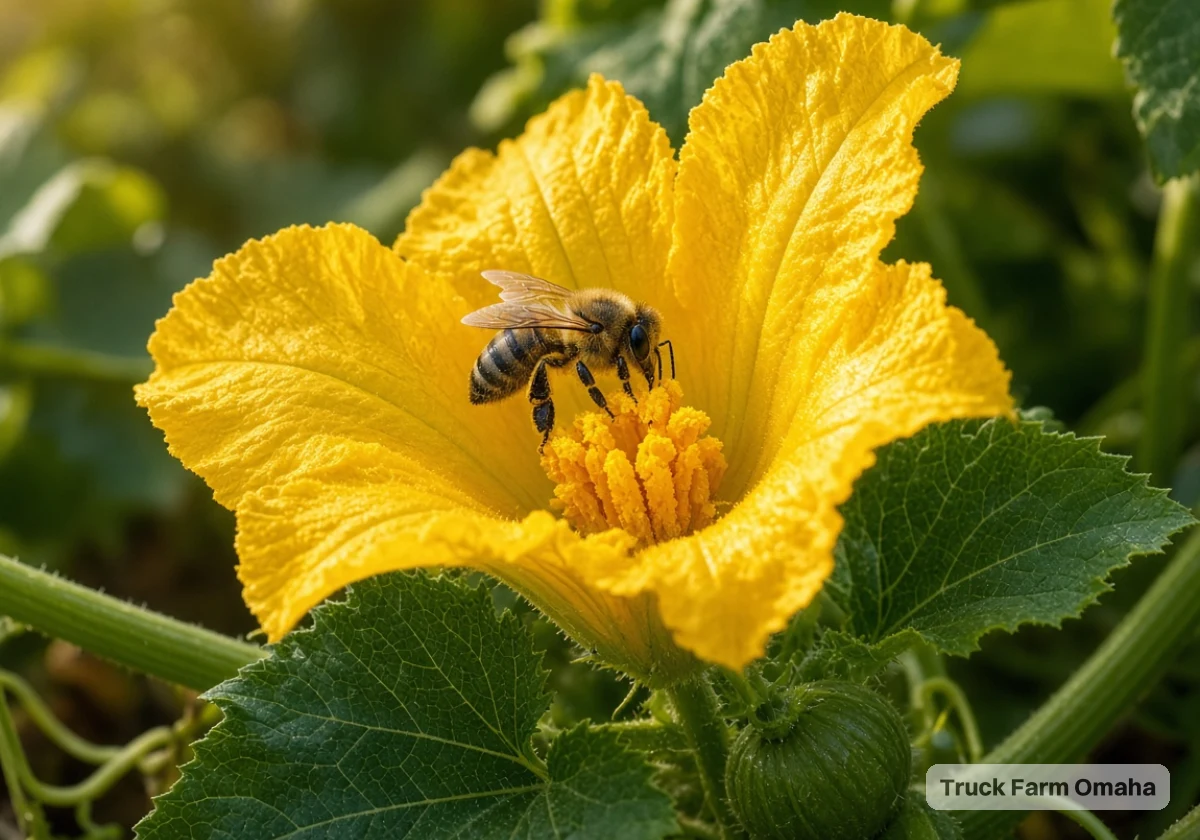
Pollinator garden for kids gives food education programs something kids can see: proof that the food on their plates depends on bees, butterflies, and other pollinators doing their work. Children who watch that process stop treating fruit as something that simply appears in a store.
So start small next spring with one sunny bed and a few native plants. Then let your students count, record, and taste whatever grows.
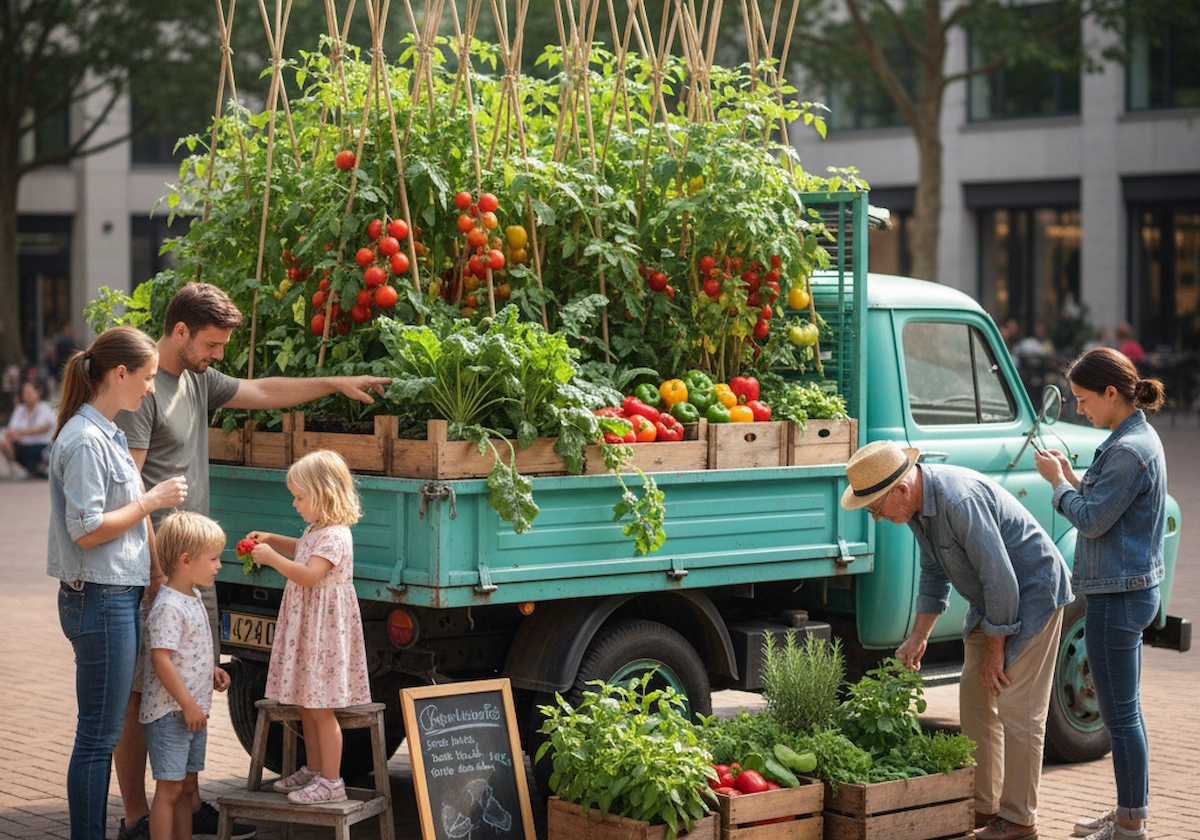
Truck Farm Omaha offers hands-on food education for schools and youth groups around Omaha. Contact Truck Farm Omaha to plan a garden lesson and show your kids where their food begins.