Most kids learn about fruits and vegetables from a chart on the classroom wall. They memorize food groups for a quiz, then forget everything by lunch. But what if they could grow that food themselves in a school garden?
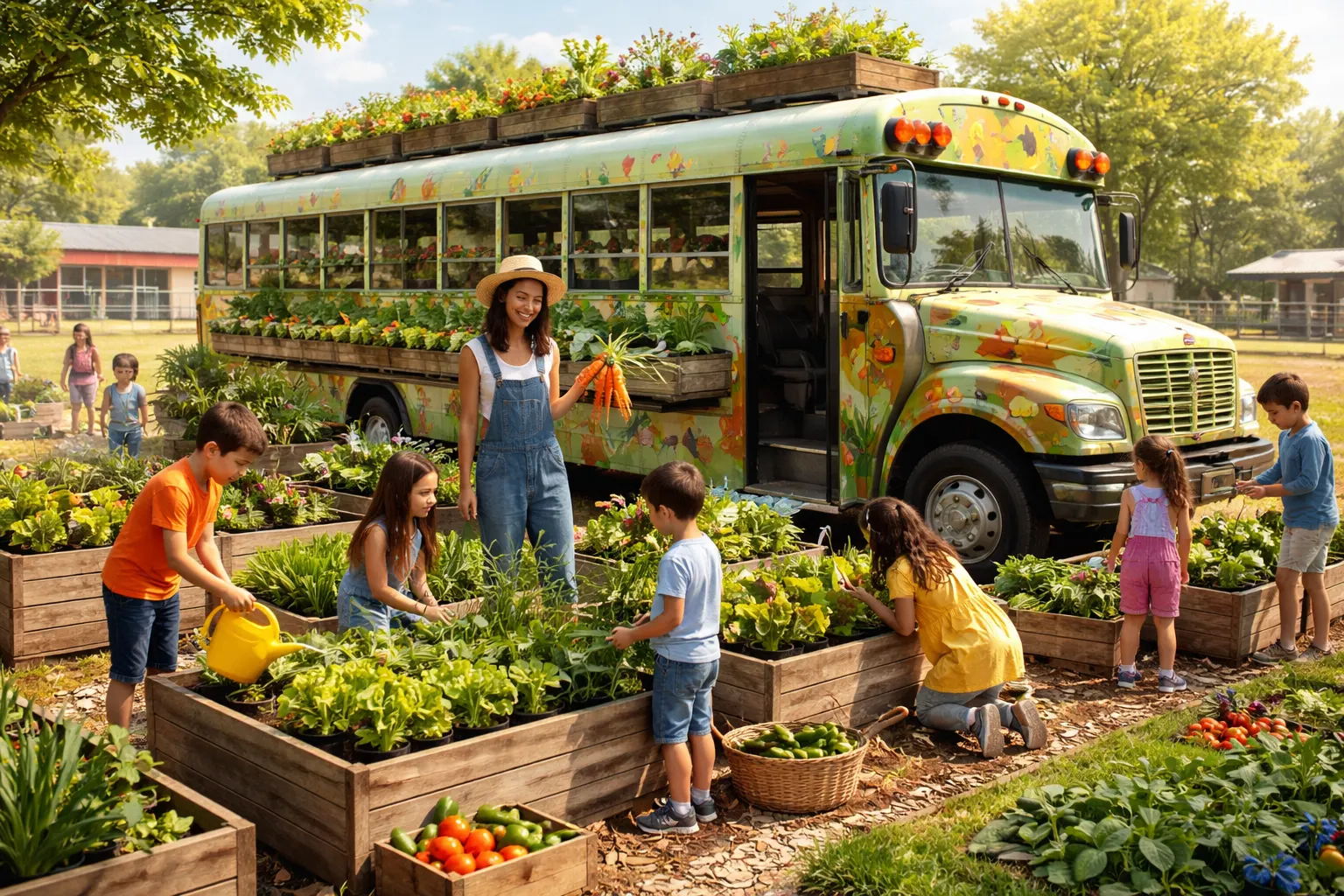
At Truck Farm Omaha, we’ve watched kids who wouldn’t touch a carrot grow one themselves and eat it the same afternoon. That lines up with what the science shows, too. A 2022 trial on PubMed covered thousands of elementary-school children, and the research on school garden programs showed increases in fruit and vegetable consumption.
In this article, you’ll learn how school garden programs build healthy eating habits and connect to garden education across subjects. We’ll also cover how gardens give families practical reasons to get involved.
What Makes a School Garden More Than Just a Patch of Dirt?
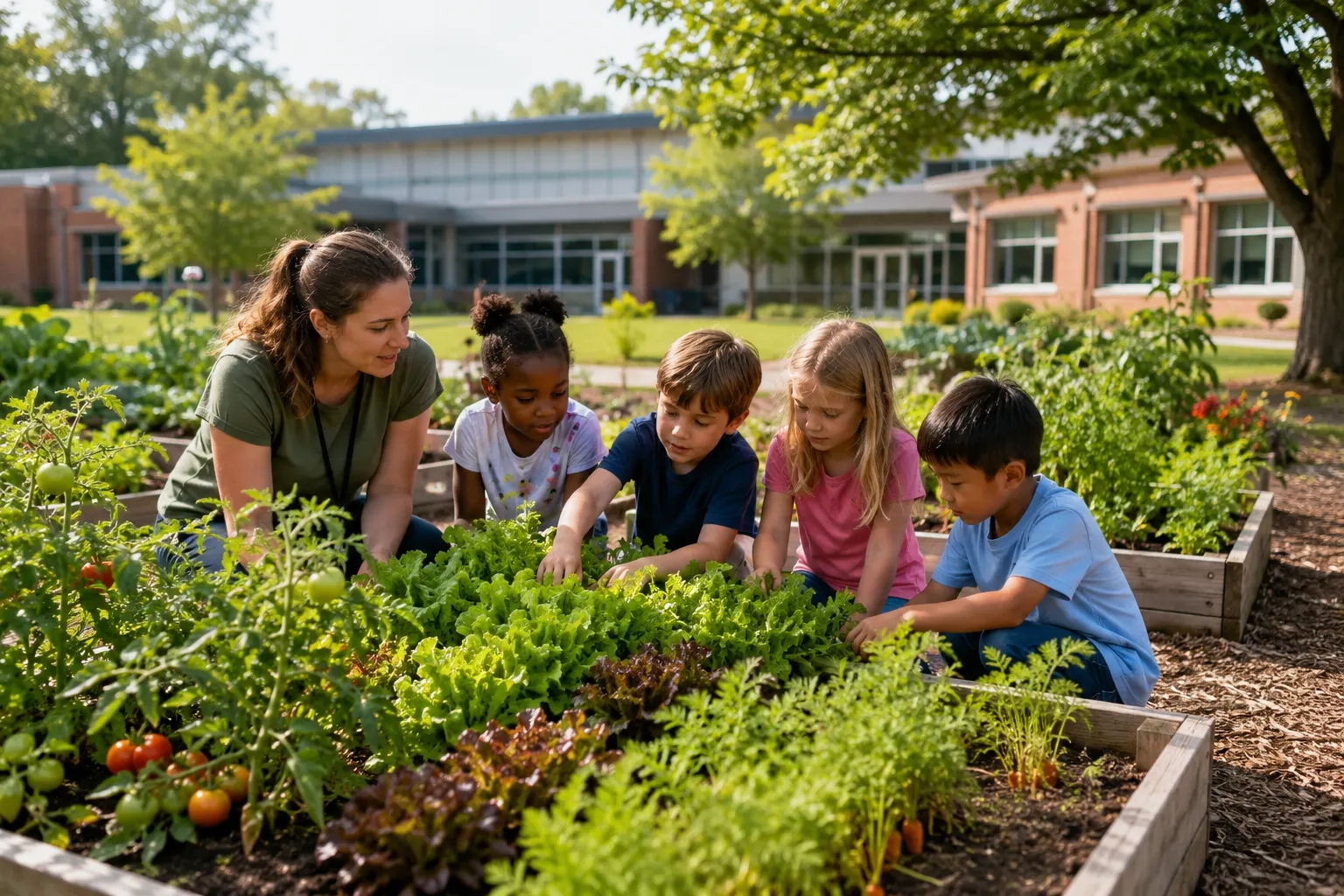
A school garden is a dedicated outdoor space where students plant, grow, and harvest food as part of their education. Even a small garden space with a few raised beds and a compost bin gives students enough room to learn year-round (it doesn’t have to be fancy to work).
Most schools can get a garden running with just a few affordable pieces. Here’s what a typical setup includes.
- Raised Beds and Soil: Most school gardens start with two to four raised beds filled with quality soil. Students grow vegetables, flowers, and herbs in these beds each season.
- Compost and Seed Stations: A compost bin teaches students how organic waste breaks down into nutrients for plants. Seed stations give kids a place to sort and prepare seeds before planting day.
- Outdoor Learning Space: Some schools add benches and shade covers so teachers can run lessons next to the garden. Students observe plants up close while studying science concepts in a hands-on setting.
A starter school garden can cost between $200 and $500, according to most state agriculture programs. So even schools with tight budgets can give students a dedicated space to grow food and learn outdoors.
How School Gardens Turn Healthy Eating Into Hands-On Learning
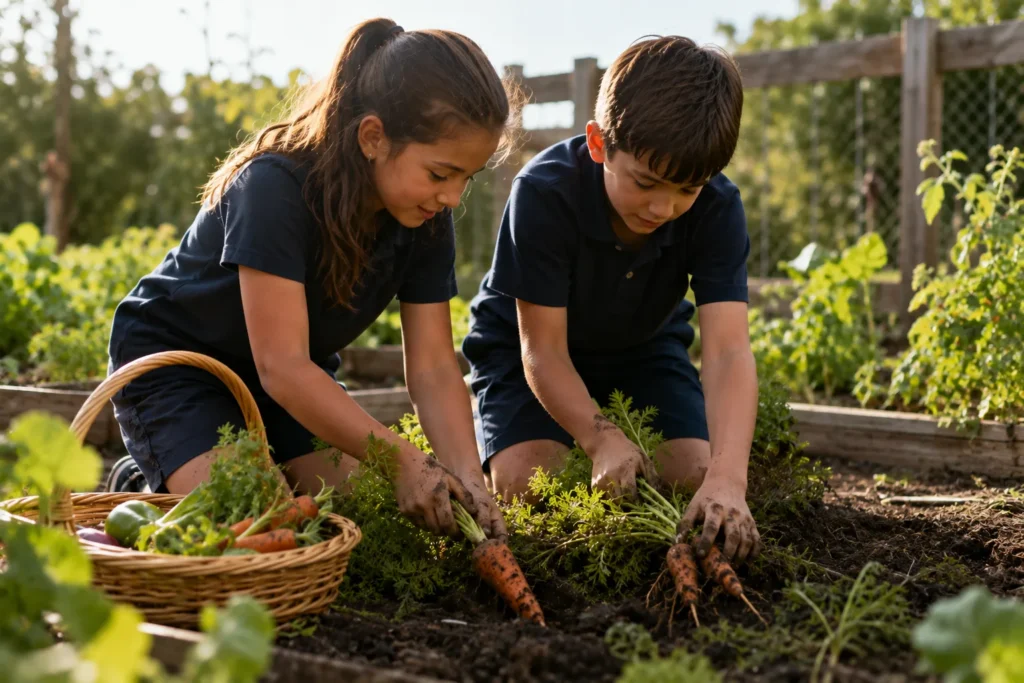
You’d be surprised how quickly a student’s opinion on vegetables changes after they’ve grown them. At Truck Farm Omaha, kids who wouldn’t touch a tomato in September were snacking on cherry tomatoes by spring.
The USDA Food & Nutrition Service notes that school gardens support healthy eating habits by connecting nutrition to hands-on experience.
The CDC’s page on nutrition education in schools goes further, noting that garden-based experiences can encourage students to try fruits and vegetables they’d normally refuse. Awareness is one thing, but these programs produce a measurable shift in what children choose to eat.
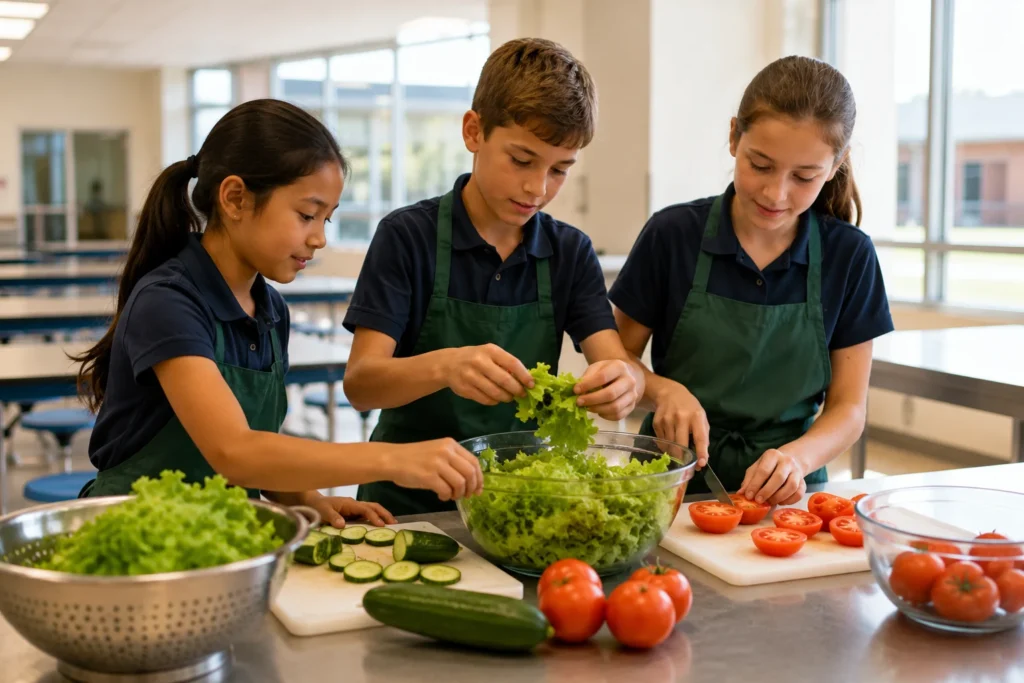
That effect carries over to the cafeteria, too. Some school garden programs now supply school meals with fresh produce from student harvests. And for families at home, cooking with ingredients their kids helped grow opens up conversations about healthy diet choices that stick long after the school year ends.
Now, let’s look at what else happens when students spend time in the garden.
Garden Education Belongs Outside the Textbook
Ever notice how students focus better when they’re outside with a job to do? A school garden channels that energy into garden education through physical activity, teamwork, and daily responsibility.
Two areas stand out for most educators who run these programs.
Teamwork and Responsibility in the Garden
When students share duties like weeding and harvesting, they learn to depend on each other. If one group skips their watering shift, the whole class sees wilted flowers by Wednesday (you’d be amazed at how fast kids figure out who forgot). That kind of accountability teaches students to plan ahead, divide tasks, and speak up when something goes wrong.
Once that’s in place, the environmental side of garden-based education starts to click.
Environmental Awareness From the Ground Up
Composting is often the first activity that connects students to the natural world. They watch food scraps and leaves break down into soil over weeks, and that one process covers biology, agriculture, and science all at once.
Water conservation fits in naturally, too. Students track how much their plants need each week and learn to cut waste. These hands-on learning moments show students that school gardens teach kids about sustainability in ways that last for years.
Lesson Plans That Bring the Classroom Into the Garden
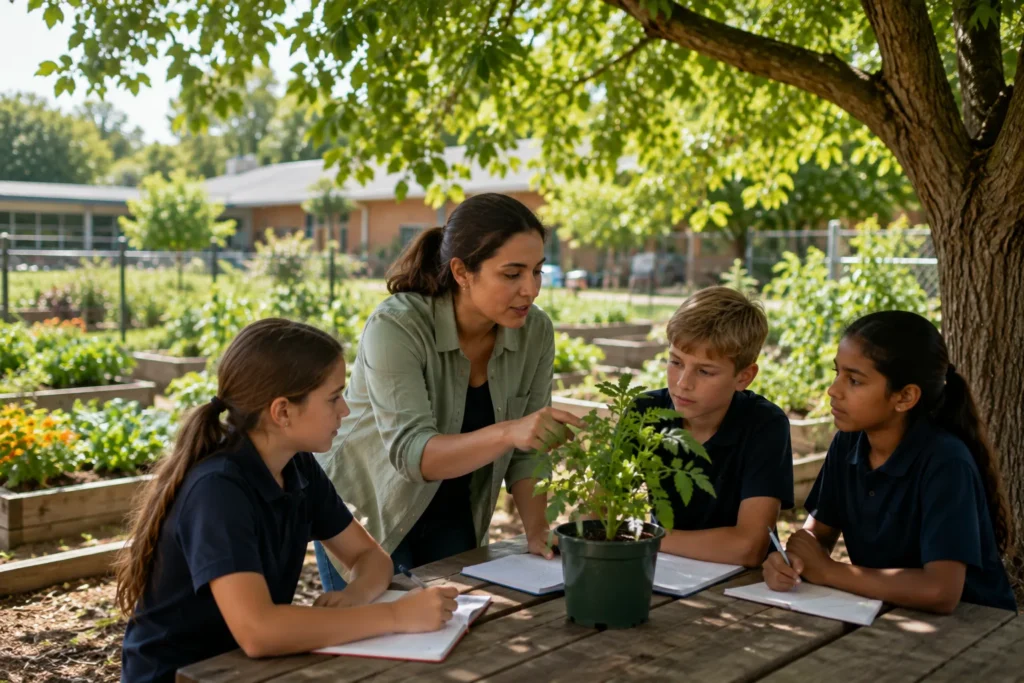
Teachers can tie garden activities directly to existing curriculum standards. And honestly, most of these lesson plans only need a garden bed and a notebook to get going.
Students observe seed germination, track growth stages, and record results over several weeks for plant science class. That same data works for math, too. Students measure bed dimensions, calculate spacing, and graph harvest weights across the season.
Language arts and social studies fit right in alongside the science. Kids journal about what they observe in the garden and write short reports on agriculture in their community. Some educators even tie in cultural research, asking students to explore how people grow crops like rice and potatoes around the world.
Ultimately, these kinds of lesson plans keep learning grounded in something students can see, touch, and take home at the end of the day.
Why More Public Schools Are Starting Garden Programs
Now that you’ve seen what garden lessons look like, it’s worth asking why so many public schools are building school garden programs of their own. A big part of the answer comes down to funding opportunities that didn’t exist ten years ago.
A few of the Omaha-area schools we’ve worked with started with nothing more than two raised beds and a bag of compost. Within one semester, those gardens were producing enough food for classroom taste tests and cafeteria donations.
Grants from federal and state agriculture departments covered most of the startup costs, and local volunteers built the beds and installed irrigation. Also, most of these funding sources are open to any public school with a written garden plan.
| Funding Source | What It Covers | Who Can Apply |
| USDA Farm to School Grants | Garden installation, nutrition education, local food sourcing | Public schools and nonprofits |
| State Agriculture Department Programs | Seeds, soil, raised beds, teaching materials | Public and charter schools |
| Local Community Partnerships | Volunteer labor, donated tools, ongoing garden maintenance | Any school with a garden plan |
The California Department of Education also offers garden-specific grants that school staff can apply for each year (not a bad deal for a program that covers nutrition, science, and outdoor time all at once).
Between these resources and growing community interest, the startup cost for a school garden has dropped significantly over the past decade. But getting a garden started is only half the work; the other half is keeping students engaged between visits.
How School Gardens Turn Healthy Eating Into Hands-On Learning
Quick Tip: You don’t need expensive gear to keep students engaged between garden visits. A few printable activity sheets and basic tools can stretch each lesson well beyond the garden itself.
Educators tend to reach for these resources first.
- Garden Journals: Kids sketch plants, record weekly observations, and track how their vegetables and flowers change over time. Teachers also use journals to connect garden education to creative writing and art.
- Printable Activity Sheets: Worksheets on seed identification, plant life cycles, and healthy eating give students structured gardening ideas to work through in the classroom. They’re especially useful on days when outdoor time isn’t available.
- Hands-On Science Kits: Magnifying glasses, rulers, and soil test kits turn each garden visit into a guided investigation. Students spend less time wandering and more time collecting data they can bring back to class.
Believe it or not, three or four of these resources are enough to keep students learning through the full growing season.
Garden Education Works Best With Dirt on Your Hands
No textbook or worksheet can replace the experience of watching a seed become food on a student’s plate. That’s what garden education comes down to. Students learn best when they can touch the soil, pick the fruits and vegetables, and share what they’ve grown with their community.
At Truck Farm Omaha, our youth-led gardens across the Omaha area bring that experience to life for families, educators, children, and volunteers every growing season.
If you’re a parent, teacher, or community member looking to start a school garden at your school, reach out to our team. We’ll help you plan, plant, and build a garden your students won’t forget.